Hastle or Hassle? Which is Correct?
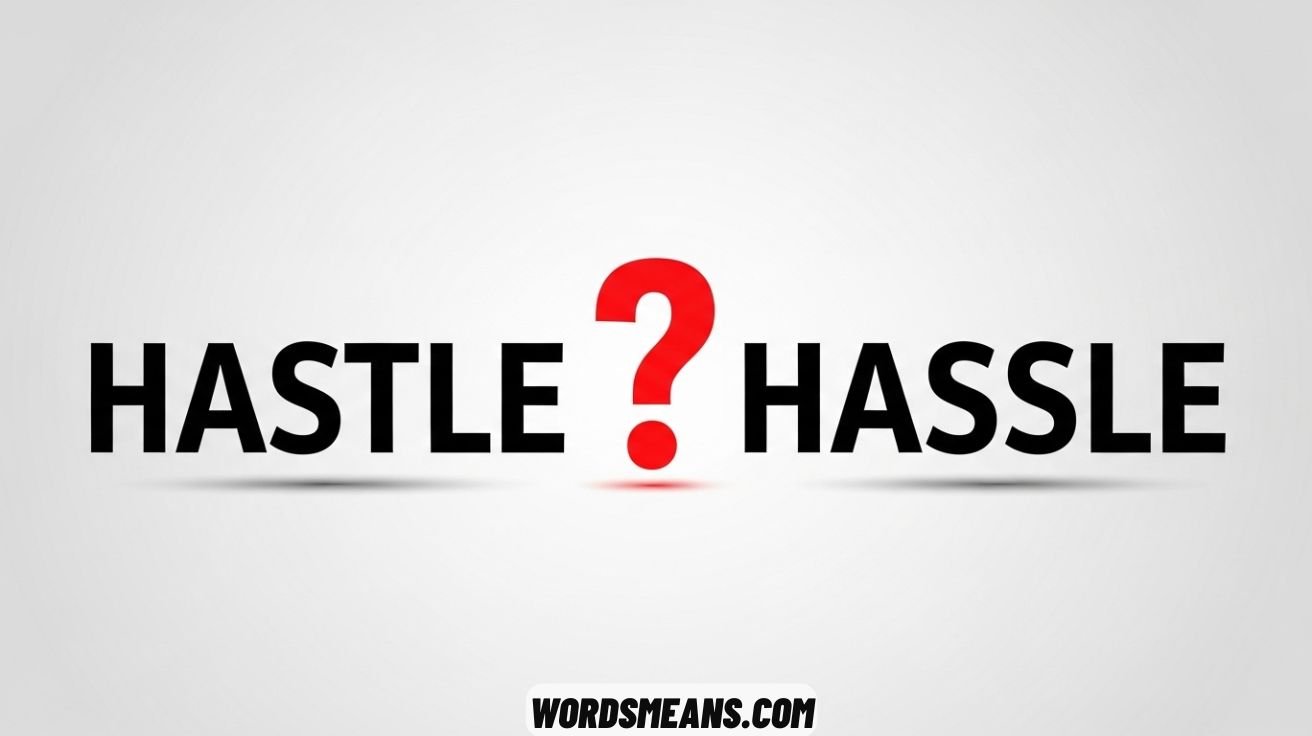
Hastle or Hassle is about a common spelling mistake. The correct word is hassle, not hastle. Hassle means trouble, annoyance, or something that causes stress.
Many people make this mistake every day. You might see it in texts, emails, or homework. Learning the right spelling helps you avoid confusion.
Hassles can happen in school, at home, or on the way to somewhere. It can be small or big problems. Using hassle correctly makes your English clear and strong.
The Correct Spelling: Hassle vs. Hastle
The spelling confusion between hassle vs hastle is more common than you might think. The correct word is always hassle, spelled H-A-S-S-L-E. On the other hand, hastle is not a valid English word and is considered a common misspelling. It is important to know that how to spell hassle correctly is essential for professional writing, emails, and even social media posts in the USA.
Here is a simple table to clarify the difference between similar words:
| Word | Spelling | Status | Notes |
| Hassle | H-A-S-S-L-E | Correct | Means annoyance, irritation, or trouble. |
| Hastle | H-A-S-T-L-E | Incorrect | Common misspelling, not used in English. |
| Hustle | H-U-S-T-L-E | Correct | Means to work fast or push forward, different meaning. |
By remembering this table, you can avoid the common misspellings that confuse English learners.
Hassle Definition & Meaning
Understanding the hassle definition is crucial for using it correctly. Hassle is a versatile word that can function both as a noun and as a verb. As a noun, it refers to an annoying situation, inconvenience, or frustration. As a verb, it means to harass, pester, or bother someone persistently, which is sometimes called hassling someone.
Many English speakers in the USA use this word in everyday challenges, whether at work, home, or in social interactions. It is different from hustle, which refers to moving quickly or working hard.
As a Noun: The Concept of a Hassle
When used as a noun, a hassle represents any inconvenience, trouble, or irritation that causes frustration in daily life. For example, standing in a long line at the airport or dealing with complicated paperwork can be described as a hassle. Hassle examples in sentences include:
“Finding parking downtown is always such a hassle,” and “The paperwork for this job application was a real hassle.”
In these examples, the word clearly conveys annoyance, minor annoyance, and persistent bothering in ordinary situations. The noun form is commonly used to describe everyday challenges that create stress or confusion.
As a Verb: The Act of Hassling
As a verb, hassle as a verb means to pester, harass, or bother someone persistently. It is the action of causing irritation or trouble. For instance, a coworker repeatedly reminding you about a deadline can be described as hassling someone. Some examples of hassle as a verb include:
“Please stop hassling me about the deadline; I’m working as fast as possible,” and “The salesperson kept hassling us to buy the extended warranty.”
Using the verb form correctly allows speakers to describe the act of persistent bothering or creating an inconvenience for someone else. This is especially useful in professional and social contexts in the USA.
Top Examples of ‘HASSLE’ in a sentence
To fully understand how to use hassle, here are some hassle examples in sentences. In the USA, these situations often occur in workplaces, daily commuting, or customer service. For instance, “Dealing with customer service was a huge hassle,” “I don’t want to hassle you, but have you finished the report yet?” and “The hassle of commuting in heavy traffic daily is wearing me down.”
These sentences show that hassle can describe both minor annoyances and more serious frustration or trouble. Recognizing the proper use of the word can improve communication and prevent language mistakes in writing or speech.
The Etymology of ‘Hassle’: Tracing Its Origins
Understanding word etymology can help remember hassle spelling. The word hassle evolved from the early 20th century dialectal word hatchel, which referred to a tool used for combing flax or hemp fibers. This process was tedious and often annoying, reflecting the modern sense of hassle. The term was first recorded in print between 1920 and 1925 in American English as a verb meaning “to pester” or “to harass.” Over time, it expanded to include the noun form describing any inconvenience, trouble, or minor annoyance.
Knowing the history and etymology of hassle helps explain why it is always spelled with double ‘s’ and never with a ‘t’.
What Causes Problems with Spelling?
Despite its common use, the word hassle is often misspelled as hastle. Several factors contribute to this confusion. The pronunciation of hassle sometimes makes it sound like it might include a ‘t’. Additionally, words like castle, tassel, and hustle have similar sounds but different spellings.
Inconsistent English spelling rules and lack of exposure to correct writing also play a role. Finally, spellcheck or auto-correct may fail to correct hastle, especially if the wrong spelling is used repeatedly. Understanding these challenges will help you avoid common misspellings and maintain proper grammar tips in your writing.
Tips to Remember the Correct Spelling: ‘Hassle’
Remembering how to spell hassle doesn’t have to be difficult. One helpful tip is to think of the double ‘s’ as representing the extra stress or irritation a hassle can cause. Another tip is to remember that hassle rhymes with tassel and castle, both of which are spelled with double ‘s’. You can also use visual memory by imagining two snakes forming the ‘ss’ in hassle, symbolizing persistent bothering or irritation.
A fun mnemonic device is “Handling A Stressful Situation Lacks Enjoyment,” which spells out H-A-S-S-L-E. Finally, practicing hassle examples in sentences regularly will reinforce correct usage and spelling.
‘Hassle’ in Popular Culture and Examples
In Music:
The word hassle has appeared in music history. Billy Joel’s early band, The Hassles, used it as their name in the 1960s. Song titles like “Hassle Free” by This Wild Life and “Ain’t No Hassle” by The Black Keys highlight the cultural use of the word in expressing frustration and annoyance.
In Literature:
Books often use hassle in titles to show ease or difficulty, such as “Hassle-Free Walt Disney World Vacation”. Biographies like “The No-Hassle Hoff” play on the concept of a life free from minor annoyance or trouble.
In Movies and TV:
Television and movies use hassle to depict characters or plot struggles. For instance, “The Hassle Man” in The Wire represents someone creating persistent irritation or frustration for others.
In Business:
Many companies in the USA use the phrase hassle-free guarantee to market smooth services. Online platforms like Hassle.com emphasize reducing trouble and inconvenience for their customers.
In Everyday Language:
Everyday expressions in American English, such as “It’s not worth the hassle” or “the hassle factor,” reflect how common the word is in describing everyday challenges.
See Also : Fishing in the Dark – Its Meaning, Origin and Usage
Using ‘Hassle’ in Literature
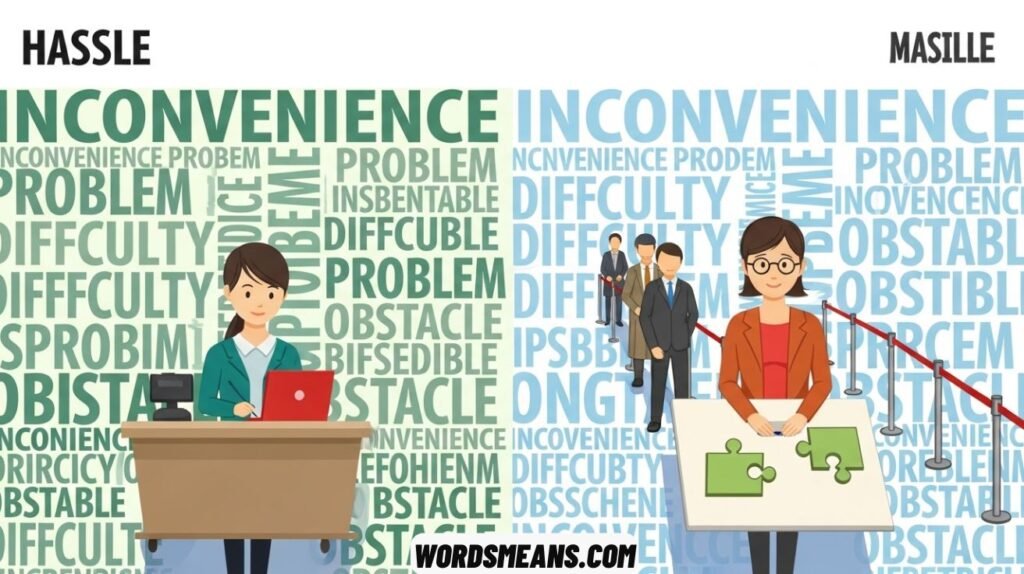
In Novels:
Writers use hassle to develop characters and plots, showing how they react to annoyance and frustration. For example, a character might struggle with the hassles of city life, which pushes them to make major life changes.
In Short Stories:
Short stories often include minor conflicts or inconvenience as a hassle to create tension and relatability. An example could be a family facing the hassle of moving houses or dealing with unexpected events.
In Poetry:
Poets use hassle metaphorically to describe irritation, frustration, or trouble in life. Lines like “Life’s hassles, like pebbles in shoes, irritate but strengthen our views” show how the word conveys everyday challenges.
In Non-Fiction:
Self-help books and memoirs frequently discuss how to turn daily hassles into learning opportunities. Titles such as “Transforming Daily Hassles into Opportunities for Growth” highlight the practical application of the word.
Real-life Examples: When ‘Hassle’ Becomes Tumultuous
While hassle often refers to minor annoyances, some situations escalate into major challenges. Air travel delays can start as a small hassle but result in missed connections and lost luggage. Bureaucratic red tape, technology failures, health insurance disputes, home renovation issues, and workplace conflicts often begin as small frustrations but grow into significant trouble. Even academic stress and environmental concerns can start as minor inconvenience and become serious problems if ignored.
Short Queries
What does hassle mean?
Hassle means an annoyance, inconvenience, or trouble that causes frustration or irritation in daily life. It can describe anything from minor annoyances, like waiting in a long line, to bigger everyday challenges. The word is versatile, functioning both as a noun for hassle examples in sentences and as a verb for hassling someone persistently, making it useful in conversation and writing.
What does hassle-free mean?
Hassle-free meaning refers to a process, task, or experience that is smooth, easy, and free from trouble, irritation, or minor annoyance. In the USA, it’s often used in business or marketing, like “hassle-free guarantee,” emphasizing convenience and efficiency. The term highlights situations where people don’t face persistent bothering, frustration, or unnecessary inconvenience, making life simpler and less stressful.
Is it a hassle or an hassle?
It is always “a hassle”, never “an hassle.” This is a simple grammar tip that aligns with English rules. Use “a” before words that begin with consonant sounds, which includes hassle. Correct usage shows your understanding of proper hassle spelling, avoiding common language mistakes, and ensures that your writing communicates frustration, minor annoyance, or everyday challenges clearly and professionally.
Why is it called hustle?
The word hustle comes from an old Dutch term meaning “to shake things up.” Over time, it evolved in English to mean moving quickly, working hard, or pushing forward. It is different from hassle, which focuses on annoyance, irritation, or persistent bothering. Understanding the difference between hassle vs hustle prevents language mistakes and ensures that words describing trouble or frustration are used correctly.
How do you use hassle?
You can use hassle to describe situations that cause minor annoyance, inconvenience, or frustration. For example, long airport lines, heavy traffic, or mountains of paperwork are all hassle examples in daily life. As a verb, you can say someone is hassling you when they pester or bother you persistently. Proper usage helps avoid language mistakes and makes communication clear in both professional and casual contexts.
See Also : Sir This Is A Wendy’s – Its Meaning, Origin and Usage
Understanding the Confusion Between Hassle and Hastle
Many people often confuse hassle vs hastle, especially in casual writing or texting. The sound of the word makes some believe it contains a “t,” but this is incorrect. The right spelling is always hassle, and knowing this prevents common mistakes in emails, social media, and professional documents. Using the correct form shows attention to detail and proper grammar.
The confusion arises because English spelling rules can be inconsistent. Words like castle, tassel, and hustle sound similar but are spelled differently. Learners must remember that hassle uses a double “s,” not a “t.” Understanding this distinction helps avoid language mistakes and ensures clarity in both personal and professional communication.
Hassle as a Noun: Everyday Challenges Explained
When used as a noun, a hassle describes an annoyance, trouble, or inconvenience in everyday life. It can refer to situations like commuting delays, paperwork, or minor frustrations at work. For instance, finding parking in a busy city or waiting in long lines can be called a hassle, emphasizing the irritation or persistent bothering it causes.
This noun form is versatile and common in the USA. Phrases like “It’s not worth the hassle” or “The hassle factor is too high” demonstrate how people use the word to describe ordinary challenges. Understanding the noun usage ensures accurate communication about minor annoyance, frustration, or irritation in daily life.
Hassle as a Verb: When Annoyance Becomes Action
Hassle as a verb means to pester, harass, or bother someone persistently. It describes the action of causing frustration or irritation for someone else. For example, a coworker repeatedly asking for updates on a report is hassling someone, which can be stressful and disruptive in everyday life.
This verb form is also widely used in American English, especially in professional and social settings. Saying “Stop hassling me about this task” communicates clear boundaries. Recognizing the difference between hassle as a verb and noun is crucial for proper grammar and avoids language mistakes in writing or conversation.
Common Hassle Examples in Daily Life
In daily life, a hassle can be anything that causes inconvenience, minor annoyance, or frustration. Waiting in traffic, dealing with long customer service calls, or handling complicated forms are classic hassle examples in sentences. People often describe these situations to express irritation without exaggeration.
Hassles can also escalate into bigger problems if ignored. For example, small work-related inconveniences may grow into stress or persistent bothering from colleagues. Recognizing everyday hassle situations helps individuals manage challenges more effectively and communicate their experiences clearly. Using the word properly demonstrates a strong grasp of English vocabulary and grammar tips.
The Origin of Hassle and Its Evolution
The word hassle comes from the early 20th century dialectal term hatchel, a tool used for combing flax. This process was tedious and often caused irritation or frustration, which explains the modern meaning. Over time, the word evolved into both noun and verb forms used in American English.
Its evolution also shows why it is spelled with a double “s.” The term was first recorded in print between 1920 and 1925. Understanding word etymology reinforces the correct spelling and usage. Knowing this history adds depth to your knowledge of English and helps prevent common misspellings like “hastle.”
See Also : To Short or Too Short? Grammar Explained
Hassle vs Hustle: Understanding the Difference
Many people confuse hassle vs hustle, but these words have different meanings. Hassle refers to annoyance, irritation, or trouble, whereas hustle means to work quickly or push forward with effort. For example, rushing to catch a bus is a hustle, but waiting in a long line is a hassle.
Knowing the difference is essential to avoid language mistakes and communicate accurately. Both words are common in American English, but their meanings are distinct. Correct usage of hassle spelling ensures clarity in writing about minor annoyances and everyday challenges without confusing it with energetic action.
Tips to Remember the Correct Spelling of Hassle
A simple way to remember how to spell hassle is to focus on the double “s,” which represents the extra stress or irritation a hassle can cause. Visual memory devices, such as imagining two snakes forming the “ss,” can reinforce correct spelling.
Mnemonics are also helpful, like “Handling A Stressful Situation Lacks Enjoyment,” which spells out H-A-S-S-L-E. Using hassle examples in sentences regularly improves memory and helps avoid common misspellings. Repetition and context make the correct spelling natural for both writing and speaking.
Hassle in Popular Culture and Everyday Life
Hassle culture appears everywhere in the USA, from music and movies to business and literature. Billy Joel’s early band, The Hassles, and songs like “Hassle Free” show the term in music. In literature and business, phrases like hassle-free guarantee and book titles convey simplicity or challenges in life.
In everyday life, Americans use expressions like “It’s not worth the hassle” to describe minor frustrations or persistent bothering. Understanding these cultural and practical applications of hassle in daily life helps learners use the word naturally, whether in conversation, writing, or professional settings.
FAQs
Is it hastle or hassle?
The correct spelling is hassle. Hastle is a common misspelling and not a valid English word.
What does hastle mean?
Hastle has no meaning in English; it is simply an incorrect spelling of hassle.
What is correct, hustle or hassle?
Both are correct words but have different meanings. Hustle means to work quickly or push forward, while hassle means annoyance or trouble.
What is the meaning of Hastling?
Hastling is not an English word. The correct term for bothering someone persistently is hassling.
Conclusion
The correct word is always hassle. Many people make a mistake and write hastle, but it is wrong. Hassle means trouble, annoyance, or something that causes stress. It can also mean bothering someone. Knowing how to spell and use hassle correctly helps you write and speak clearly in school, at home, or anywhere.
Understanding Hastle or Hassle also helps avoid confusion with similar words like hustle. Using the word properly shows good English skills. You can describe everyday problems, minor annoyances, or persistent bothering with hassle. Practicing spelling and using it in sentences makes learning easy. Remembering this simple rule keeps your English accurate and confident.