What Is the Current Phase of the Moon as an Emoji?
The current phase of the moon emoji means a moon symbol that shows the Moon’s real appearance in the sky. It represents whether the Moon is new, half, or full. People use it in digital chats to match the lunar phase in a simple visual way.
Have you ever looked at the night sky and wondered which moon emoji fits it? The Moon changes its shape every night, which makes it interesting to follow. This is why people enjoy using moon emojis to match real sky moments.
The current phase of the moon emoji connects real lunar changes with digital symbols. It is commonly used in texting, astrology, and social media posts. It helps people understand and share moon phases in an easy and visual way.
Understanding Moon Emojis: More Than Just Cute Icons
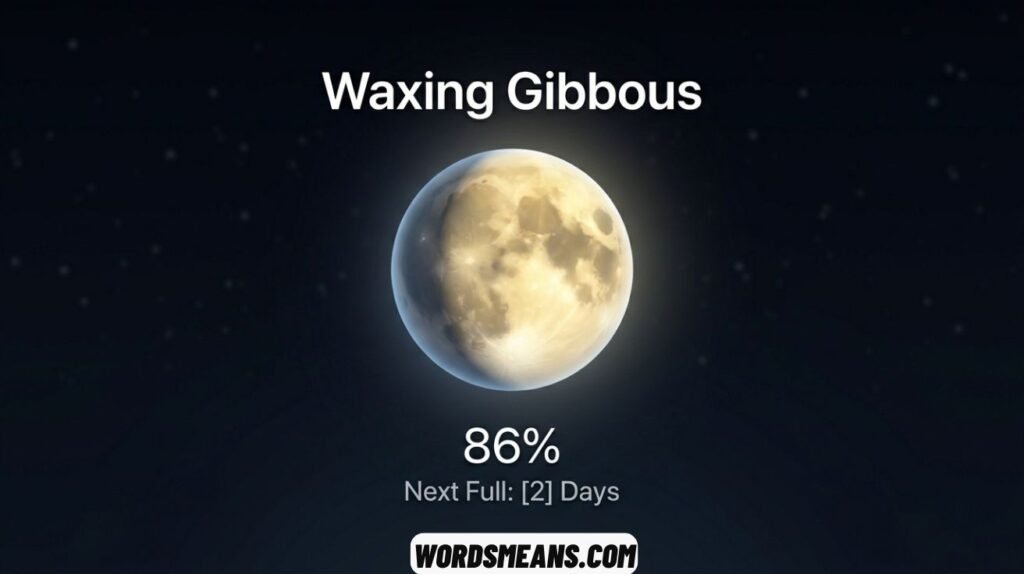
Moon emojis are much more than decorative symbols used in text messages. They represent the various stages of the moon’s journey around Earth. Every month, the moon changes its appearance as sunlight reflects from different angles. These changes create what we know as lunar phases.
Each moon phase emoji today represents a specific stage of the lunar cycle. These emojis allow people to visually communicate lunar events without using words. The modern collection of moon emojis follows the same sequence as the actual moon phases observed in the sky.
The following table shows the most common moon emojis and their meanings.
| Emoji | Phase Name | Description |
| 🌑 | New Moon | Moon not visible from Earth |
| 🌒 | Waxing Crescent Moon | Small illuminated crescent growing larger |
| 🌓 | First Quarter Moon | Half of the moon illuminated |
| 🌔 | Waxing Gibbous Moon | More than half illuminated and growing |
| 🌕 | Full Moon | Entire visible surface illuminated |
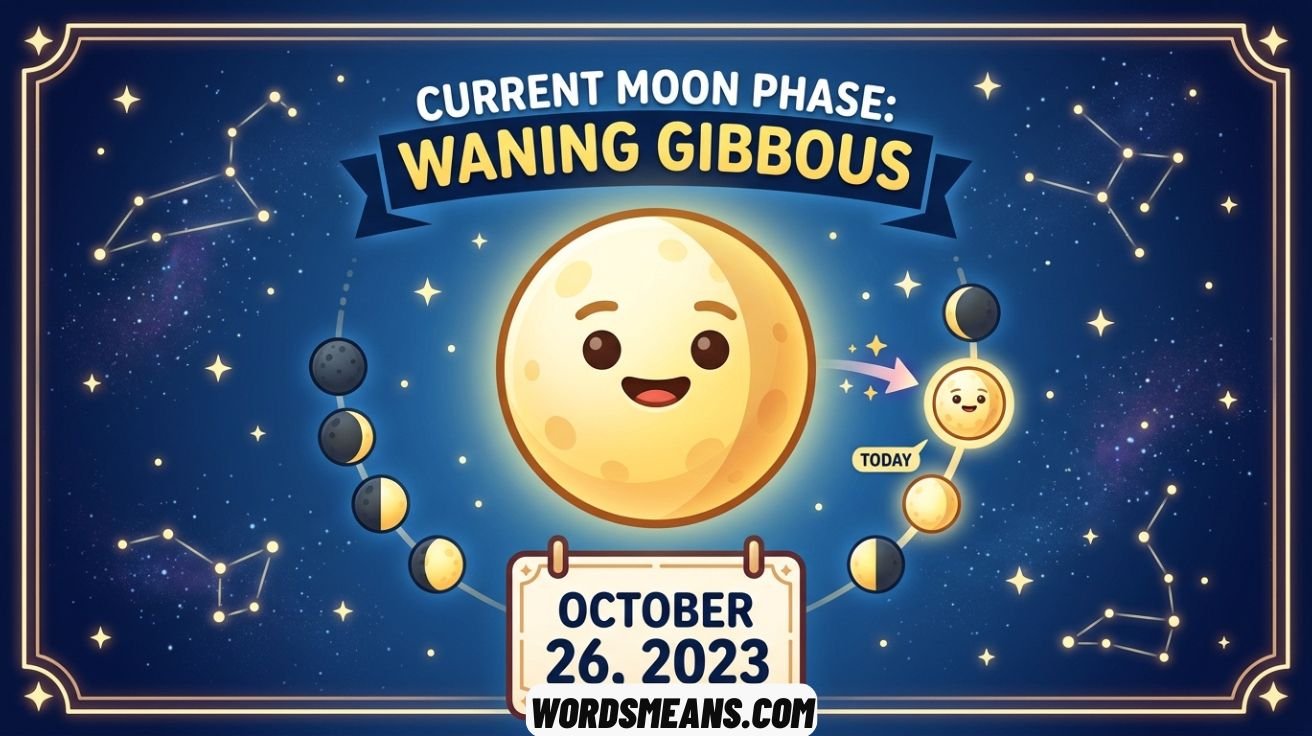
| 🌖 | Waning Gibbous Moon | More than half illuminated but shrinking |
| 🌗 | Last Quarter Moon | Half illuminated during decline |
| 🌘 | Waning Crescent Moon | Thin crescent before new moon |
A current moon emoji helps people express the lunar stage they are discussing. Understanding the moon emoji meaning behind each symbol can improve communication and help users better connect with lunar events.
The lunar phase emoji collection has become extremely popular across social media platforms because people enjoy sharing moon-related content. From photographers and astronomers to spiritual communities, moon emojis are used daily to symbolize different energies, moods, and natural cycles.
A moon cycle emoji visually represents one stage of the moon’s monthly journey. Since the moon affects tides, calendars, and cultural traditions, these symbols have become important moon symbol meanings in digital communication.
Do Moon Emojis Match the Real Moon Phase?
One of the biggest misunderstandings about moon emojis is the belief that they automatically reflect the moon’s current appearance. In reality, moon emojis are static symbols. They remain the same regardless of the actual lunar phase happening outside.
For example, if you send a 🌕 emoji, it will always display a full moon even if the real moon is currently a crescent. The emoji itself never changes. This is why checking the actual lunar phase is important if you want to use the correct moon symbol.
A moon emoji chart can help users identify which emoji corresponds to the real lunar stage. However, the emoji itself does not receive live updates from astronomical data.
The concept of a real moon phase emoji simply means selecting the emoji that best matches the moon’s current appearance. Since moon emojis are fixed symbols, users must manually choose the correct one.
Many people confuse a waxing moon emoji with a waning moon emoji. Waxing phases indicate that the illuminated portion of the moon is growing larger each night. Waning phases indicate that the illuminated portion is becoming smaller.
The full moon emoji is one of the most recognizable symbols because it represents the brightest phase of the lunar cycle. Similarly, the new moon emoji represents the darkest phase when the moon is nearly invisible from Earth.
The crescent moon emoji is often used to symbolize nighttime, dreams, mystery, and spirituality, although it may not always represent the moon’s actual current phase.
Real-Time Moon Phases: How to Check the Actual Lunar Phase
If you want to know what is the current phase of the moon as an emoji, you first need to identify the real lunar phase. Fortunately, modern technology makes this process easy.
A moon calendar emoji is useful for symbolic communication, but real-time lunar information requires specialized tools. Many people use a moon tracker emoji alongside astronomy apps to match digital symbols with real observations.
One of the easiest ways to check the moon’s status is through a moon phase calendar. These calendars display each day’s lunar stage and often include additional information such as rise and set times.
A lunar calendar follows the moon’s cycle rather than the sun’s cycle. Various cultures around the world still use lunar calendars for religious events, festivals, and traditional celebrations.
The moon completes a full moon cycle approximately every 29.5 days. During this time, it moves through all visible phases.
Modern apps often provide the exact moon illumination percentage, showing how much of the moon’s visible surface is illuminated by sunlight. This measurement helps users determine the precise lunar stage.
Many astronomy enthusiasts use a lunar tracking app to receive daily updates. These apps provide detailed information about lunar cycle phases, moonrise times, moonset times, and visibility conditions.
Another helpful tool is a moon phase tracker. These trackers offer real-time updates and visual representations of the moon’s appearance throughout the month.
People interested in moon observation often compare the actual moon in the sky with images shown in tracking apps. This practice helps improve understanding of lunar movements and celestial mechanics.
See Also : Roasts That Hurt and Rhyme (200+ Savage Lines)
Why This Matters More Than You Think
Some people may wonder why matching moon emojis to real lunar phases matters. While it may seem like a small detail, it can have meaningful benefits.
Accurate moon representation enhances educational understanding. Students learning astronomy can use moon emojis as visual references for studying lunar cycles.
Social media users often share photos of the moon accompanied by matching emojis. Using the correct emoji creates more accurate and engaging content.
Understanding the moon phase today also helps people appreciate the natural world. The moon influences tides, animal behavior, cultural traditions, and even some agricultural practices.
The moon has fascinated humans for thousands of years. Ancient civilizations carefully tracked lunar movements and developed calendars based on moon cycles. Today, moon emojis provide a modern way to continue this connection.
Many people find that following the moon helps them feel more connected to nature. Matching the correct emoji with the moon’s appearance creates a simple but meaningful way to engage with the night sky.
Expert Insight
Astronomers explain that lunar phases occur because of the moon’s position relative to Earth and the Sun. The moon does not produce its own light. Instead, it reflects sunlight.
As the moon travels around Earth, different portions become visible. This changing visibility creates the phases we observe throughout the month.
According to astronomy experts, the moon’s appearance can be measured using lunar illumination. This value describes how much of the moon’s visible surface is lit at any given moment.
Scientists use sophisticated calculations to generate accurate moon phase prediction models. These predictions help create calendars, tracking apps, and astronomical databases.
Modern technology allows users to access precise information about upcoming lunar events, including full moons, eclipses, supermoons, and new moons.
Moon emojis serve as simplified versions of these astronomical observations. Although they are not scientifically exact, they provide accessible visual representations of lunar stages.
“The moon is a reminder that change can be beautiful, predictable, and worth observing.”
This idea reflects why people continue using moon across cultures and digital platforms.
How to Match the Current Moon Phase to the Right Emoji
Matching the moon’s appearance to the correct emoji is easier than many people think.
First, check the moon’s current phase using a trusted lunar tracking source. Once you know the phase, compare it with a moon phase guide.
The following table can serve as a quick moon phase chart.
| Real Moon Phase | Emoji |
| New Moon | 🌑 |
| Waxing Crescent Moon | 🌒 |
| First Quarter Moon | 🌓 |
| Waxing Gibbous Moon | 🌔 |
| Full Moon | 🌕 |
| Waning Gibbous Moon | 🌖 |
| Last Quarter Moon | 🌗 |
| Waning Crescent Moon | 🌘 |
When viewing the night sky moon, observe whether the illuminated section is growing or shrinking.
A waxing crescent moon appears shortly after the new moon and gradually increases in brightness.
A first quarter moon displays half of the moon illuminated and signals the transition toward a fuller appearance.
A waxing gibbous moon appears almost full but continues increasing in illumination.
The full moon represents maximum visibility and is commonly associated with celebration and completion.
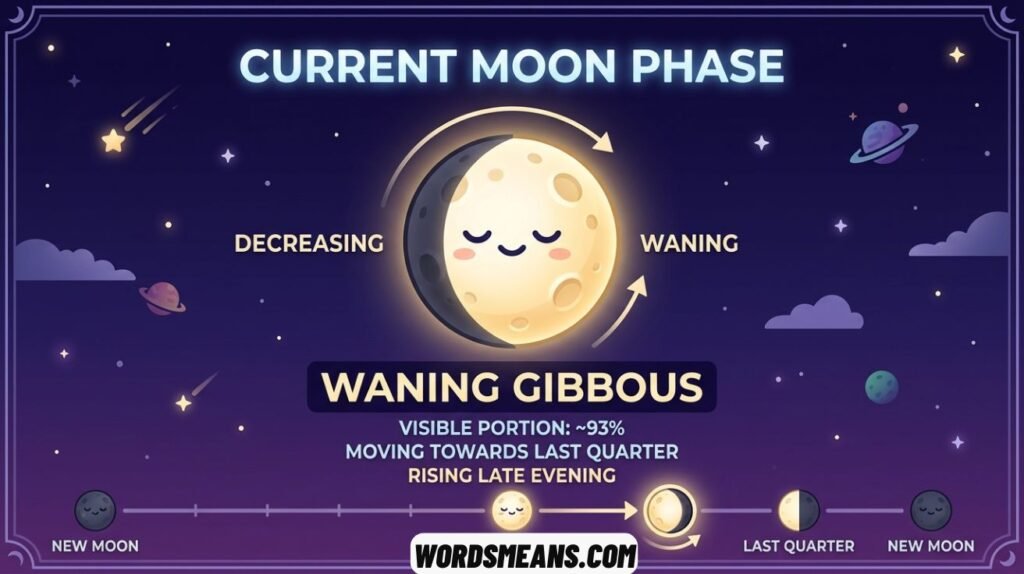
After the full moon, a waning gibbous moon begins the shrinking process.
The last quarter moon marks another half-illuminated stage as the moon continues declining.
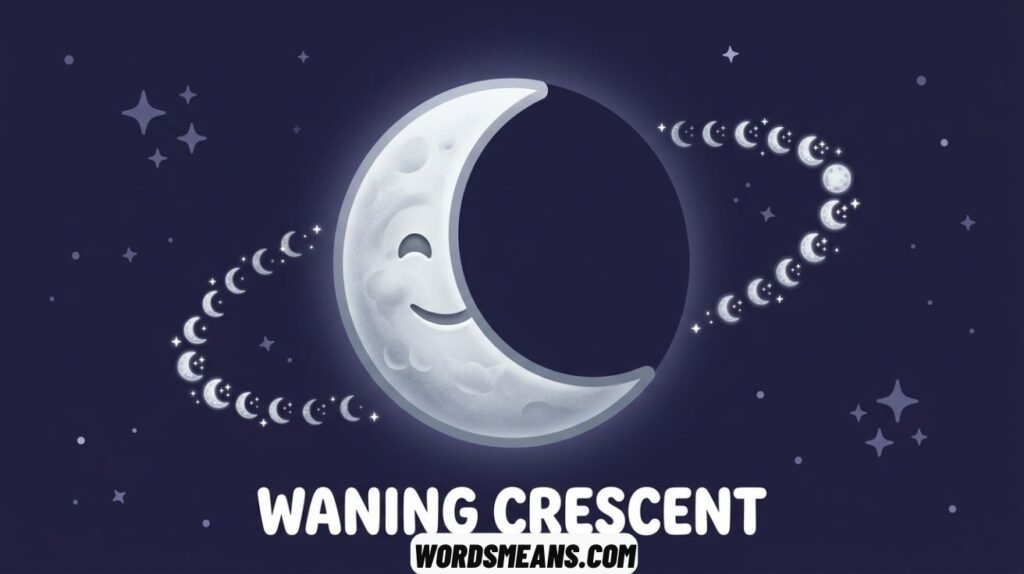
A waning crescent moon is the final visible stage before the cycle returns to the new moon.
Using a reliable moon emoji reference can help users quickly select the correct symbol.
See Also : Yellow Heart Emoji Meaning and How to Respond to It
Emoji Use in Astrology and Rituals
Moon emojis have become powerful symbols in astrology communities and spiritual practices. Many people use them to represent intentions, emotions, and life transitions.
The new moon meaning often focuses on fresh starts, new goals, and personal growth. People frequently use the 🌑 emoji when beginning projects or setting intentions.
The full moon meaning is commonly associated with completion, achievement, and heightened awareness. The 🌕 emoji appears frequently during full moon rituals and celebrations.
Many spiritual practitioners use moon emojis as celestial symbols representing cosmic energies. These symbols are often included in journals, social media posts, and manifestation practices.
The various moon emoji meanings can differ across cultures, but they generally reflect growth, change, reflection, and renewal.
Astrology enthusiasts often combine moon emojis with zodiac signs to discuss lunar influences and planetary alignments.
These astronomy emojis help bridge scientific observation and symbolic interpretation, making them popular among diverse audiences.
Moon Emojis and Platform Differences
One interesting aspect of moon emojis is that they do not appear exactly the same on every device.
Apple devices often display highly detailed moon designs with realistic shading and smooth textures.
Android devices typically use simpler visual styles with bold shapes and cleaner lines.
Samsung, Microsoft, and web platforms each create their own versions of moon emojis. As a result, the same emoji may look slightly different depending on the device being used.
These differences occur because companies design their own digital moon symbols while maintaining the same Unicode standards.
Despite visual variations, the underlying meanings remain consistent. A full moon emoji still represents a full moon regardless of platform design.
Understanding these platform differences helps users recognize moon symbols across devices and communication channels.
Fun Facts About Moon Phases and Emojis
The moon completes one full cycle around Earth in about 29.5 days. During this journey, we see different lunar phases that have inspired many of the moon emojis used today. These symbols help people visualize the changing appearance of the moon in a simple and engaging way.
Moon emojis are among the most commonly used celestial symbols online. People often include them in social media posts, text messages, and astronomy discussions. Their popularity comes from their ability to represent nature, mystery, and the beauty of the night sky with a single character.
How Moon Emojis Became Popular Online
Moon emojis gained popularity as smartphones and social media platforms became part of everyday communication. Their simple design and universal meaning allowed people from different cultures to express emotions, moods, and interests related to the moon without using many words.
Today, moon emojis appear across platforms such as Instagram, TikTok, Facebook, and X. Users often pair them with photos of the night sky or use them in astrology content. Their widespread use has made them recognizable symbols in digital communication worldwide.
The Relationship Between the Moon and Earth
The moon plays an important role in Earth’s natural systems. Its gravitational pull affects ocean tides and helps stabilize Earth’s rotation. Without the moon, our planet would experience very different environmental conditions and seasonal patterns.
Scientists continue studying the moon to better understand the history of our solar system. Observing lunar phases helps researchers track orbital movements and gather valuable information about celestial mechanics. Moon emojis offer a simplified way to represent these scientific observations.
See Also : Snowball Kiss Meaning 2026: A Comprehensive Guide
Why People Love Tracking Moon Phases
Many people enjoy following lunar phases because they create a deeper connection with nature. Watching the moon change shape throughout the month can be relaxing and educational. It also encourages regular observation of the night sky.
Moon tracking has become easier thanks to modern technology. Apps and online calendars provide instant access to lunar information. As a result, more people are learning about moon phases and using matching emojis to share their observations with others.
Common Mistakes When Using Moon Emojis
One common mistake is using a full moon emoji when the actual moon is in a different phase. Since emojis do not update automatically, users often choose symbols based on appearance rather than current lunar data.
Another misunderstanding involves confusing waxing and waning phases. Many people assume all crescent moons represent the same stage. Learning the difference between growing and shrinking illumination helps users select more accurate moon emojis.
Future of Moon Emojis and Lunar Technology
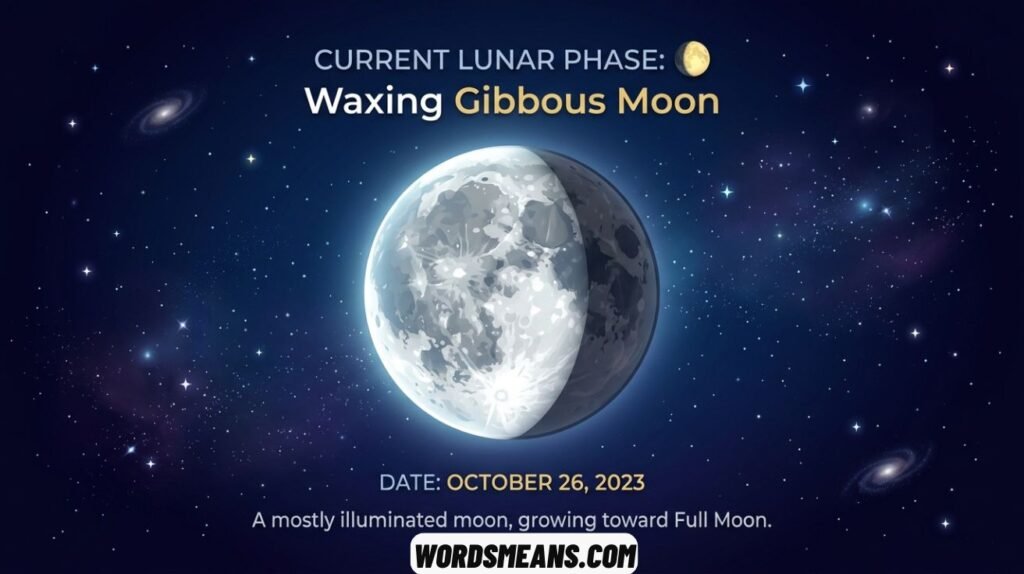
As technology advances, moon tracking tools are becoming more detailed and user-friendly. Future applications may offer even more accurate visual representations of lunar phases, helping users better match moon emojis with real-world observations.
Developers continue improving astronomy apps, educational resources, and lunar calendars. While moon emojis themselves will likely remain static symbols, new technologies may make it easier than ever to understand and follow the moon’s changing appearance.
FAQs
🌒 What does the 🌒 emoji mean?
The 🌒 emoji means Waxing Crescent Moon, showing a small growing sliver of light after the New Moon. It represents early growth in the lunar cycle.
🌖 What is 🌖?
The 🌖 emoji represents a Waning Gibbous Moon, meaning the Moon is mostly lit but slowly shrinking after the Full Moon.
🌜 What is 🌜?
The 🌜 emoji shows a stylized Last Quarter / Moon Face, symbolizing the later stage of the lunar cycle before the New Moon.
🌓 What is 🌓?
The 🌓 emoji means First Quarter Moon, where half of the Moon is illuminated, marking the midpoint of the waxing phase.
Conclusion
Understanding what is the current phase of the moon as an emoji allows you to connect modern digital communication with real astronomical events. While moon emojis do not automatically update, they provide a simple and enjoyable way to represent lunar phases.
Whether you are checking the moon phase emoji today, studying the lunar cycle, following astrology, or simply enjoying the beauty of the moon, knowing the correct emoji adds accuracy and meaning to your messages.
By using a moon phase tracker, consulting a moon phase calendar, and understanding the different moon phase symbols, you can always choose the right moon emoji for the night sky above you. The next time you look up and admire the moon, you’ll know exactly which emoji matches its appearance.