
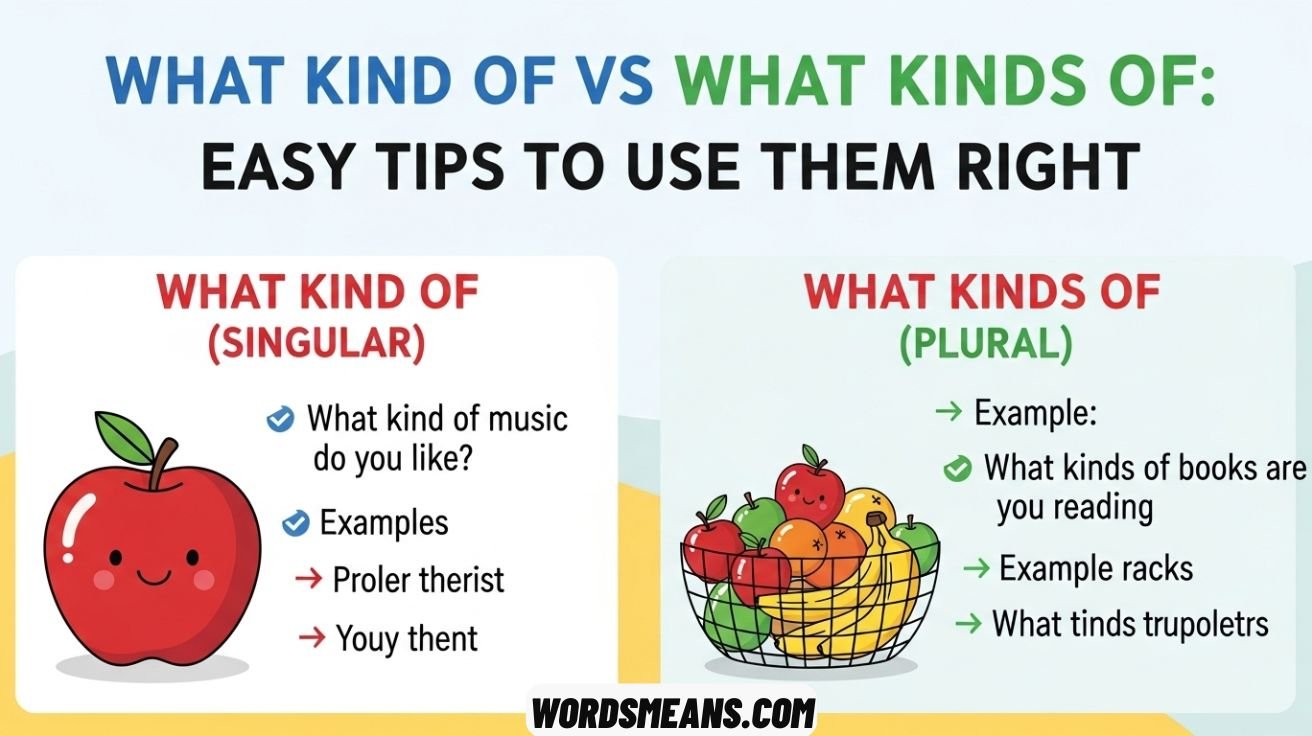
What Kind of Vs What Kinds of: Easy Tips to Use Them Right
What Kind of is a phrase used in English to talk about one type or one group. It helps people describe things clearly. This phrase follows simple grammar rules and appears often in daily English.
Many students feel confused when they see What Kind of in questions or sentences. This confusion can make English feel hard. Learning this phrase makes English easier and more enjoyable.
What Kind of is common in school, work, and daily conversations. People use it to describe choices, ideas, or preferences. Knowing how to use it correctly helps improve speaking and writing skills.
Understanding the Basics: Singular vs. Plural
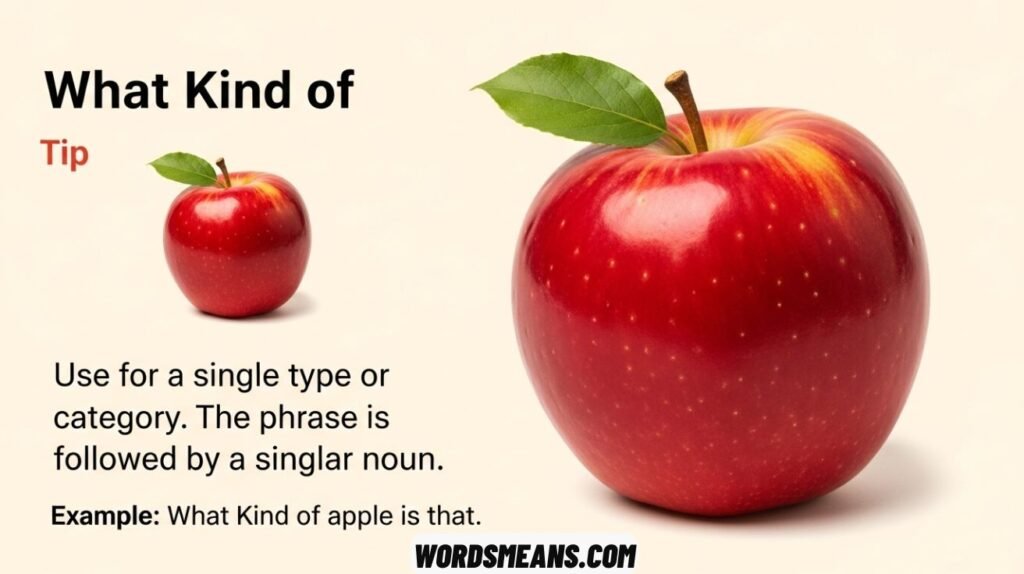
At the heart of what kind of or what kinds of lies one simple idea: singular vs plural usage. English depends heavily on grammatical number, which means whether a noun refers to one thing or more than one thing. This rule affects verb forms, articles, and especially question phrases like these.
When we talk about singular and plural nouns, we are really talking about how many items we are thinking about. If the speaker is thinking about one category, one type, or one example, English grammar requires a singular form. If the speaker is thinking about multiple categories or varieties, the plural form is required. This is a core part of grammar rules in English and is essential for correct grammar usage.
To make this clearer, look at the table below, which shows how sentence structure in English changes based on meaning.
| Question Form | Noun Type | Meaning |
| What kind of | Singular or uncountable | One type or category |
| What kinds of | Plural | Multiple types or categories |
This simple rule explains most cases and helps learners understand how to ask correct questions when asking about types.
“What Kind of”: The Singular Inquiry
The phrase “What Kind of”: The Singular Inquiry is used when you are asking about one specific type, category, or form of something. Grammatically, it is followed by a singular noun or an uncountable noun. This is a key point in kind vs kinds grammar and often misunderstood by learners.
In everyday American English, this phrase appears in many English question forms. For example, when someone asks, “What kind of car do you drive?” they are not asking about many cars. They are asking about one category, such as an SUV or a sedan. This is a perfect example of what kind of questions in English that expect one clear answer.
This form is also very common with countable and uncountable nouns. Even though uncountable nouns may refer to many ideas, they are treated as singular in grammar. For example, music includes many genres, but grammatically it is one uncountable noun. That is why “What kind of music do you like?” is correct. This shows how to use “kind of” correctly in both formal and informal situations.
“What Kinds of”: The Plural Exploration
The phrase “What Kinds of”: The Plural Exploration is used when the speaker wants to know about more than one type or category. It must be followed by a plural noun, which makes it a clear example of plural nouns in English grammar.
For instance, when someone asks, “What kinds of movies do you like?” they are inviting a range of answers. Action, comedy, drama, and documentaries can all be included. This shows the types vs kind difference very clearly, because the question is not limited to one answer.
This structure is extremely common in surveys, interviews, classrooms, and workplace discussions in the United States. It is also important for grammar for ESL learners, because using the wrong form can confuse listeners. Saying “What kind of movies do you like?” sounds incorrect because the noun movies is plural, and the grammar does not agree.
Learning how to use “kinds of” properly helps you sound more natural and confident, especially in professional or academic settings.
Contextual Usage: When to Use What Kind of Vs What Kinds of
Choosing between what kind of vs what kinds of depends heavily on context. Context tells us whether the speaker wants one answer or many. This is why understanding English usage rules is not just about memorizing grammar but about understanding meaning.
In American English, context shapes expectations. A teacher asking a student about their major is usually asking for one answer. A researcher asking about study methods expects several answers. This difference affects grammar choice and helps avoid common grammar mistakes in English.
The table below shows how context changes meaning.
| Question | Focus | Expected Answer |
| What kind of job do you want? | One goal | One type of job |
| What kinds of jobs are available? | Many options | Multiple job types |
This simple contrast explains many what kind of vs kinds of examples seen in real life.
Specific Inquiries
The heading Specific Inquiries refers to questions where the speaker expects a single, focused answer. These questions are common in interviews, classrooms, and personal conversations. They are often used when clarity is important and when decisions depend on one option.
For example, “What kind of degree are you pursuing?” is asking about one academic path. This is common in academic English writing and professional communication. The speaker is not asking about all degrees, but one specific program. This shows correct English sentence examples in formal settings.
Broad Explorations
The heading Broad Explorations refers to questions that invite variety and discussion. These questions are open-ended and often used in brainstorming, research, and casual discussions. For example, “What kinds of skills are employers looking for?” invites many answers and reflects modern workplace realities in the United States.
These questions are excellent English grammar tips examples because they show how grammar supports meaning. Using the plural form signals openness and flexibility in the conversation.
Common Mistakes and How to Avoid Them

Even fluent speakers make errors with these phrases, which is why they are listed among common grammar mistakes in English. The most frequent problem is mismatching the grammar form with the noun. This mistake happens when people focus on meaning but forget grammatical agreement.
Understanding singular and plural nouns and checking noun form before choosing the phrase is the easiest way to avoid errors. Reading your sentence aloud often helps because incorrect forms usually sound awkward.
Mismatching Singular and Plural
One of the biggest problems learners face is using a singular phrase with a plural noun or the opposite. Saying “What kind of books do you like?” sounds wrong because books is plural. The correct form is “What kinds of books do you like?” This mistake clearly shows confusion about the difference between kind and kinds.
Confusion with Collective Nouns
Another tricky area involves collective nouns in English, such as team, family, or group. These nouns look singular but represent multiple people. In most American English usage, collective nouns are treated as singular when the group is seen as one unit.
For example, “What kind of family do you come from?” is correct because family is treated as one unit. Understanding this rule helps with correct grammar usage and prevents confusion in both writing and speaking.
Overlooking Context
Sometimes grammar is technically correct, but context makes it inappropriate. Asking “What kinds of fruit do you like?” sounds fine if you expect several answers. Asking the same question when choosing one dessert may sound strange. This shows how important context is for spoken English examples and real-life communication.
Practical Examples in Various Contexts
Seeing grammar in action makes learning easier. Practical examples help connect rules to real communication, especially for learners in the United States.
In Educational Settings
In schools and universities, grammar precision matters. A professor might ask, “What kind of research are you conducting?” because the focus is on one project. Another professor might ask, “What kinds of sources did you use?” because multiple sources are expected. These examples show how grammar supports clarity in academic environments.
In Professional Environments
In the workplace, grammar affects professionalism. A manager asking, “What kind of budget are we working with?” expects one clear figure. Asking, “What kinds of expenses should we expect?” opens the discussion to many categories. These examples highlight the importance of grammar in decision-making.
In Everyday Conversations
In daily life, Americans use these phrases naturally. “What kind of movie do you want to watch?” suggests choosing one option. “What kinds of movies do you like?” invites a conversation about preferences. These are perfect spoken English examples that show how grammar reflects intention.
Enhancing Your Language Skills
Improving your understanding of what kind of vs kinds of examples helps you move beyond basic English into more fluent communication. This topic is closely connected to singular vs plural usage, which is one of the foundations of grammar rules in English. When you use these expressions correctly, your questions sound clearer, more polite, and more professional. This is especially important in the United States, where clear communication is valued in education and the workplace.
Mastering this rule also improves sentence structure in English because it trains you to match nouns with the correct grammatical form. This skill supports correct grammar usage and reduces confusion when asking about types in everyday conversations or professional discussions.
Advanced Uses and Exceptions
English grammar is logical, but it also has flexibility. Advanced usage of kind vs kinds grammar shows that meaning sometimes matters more than form. While basic rules are helpful, fluent speakers often rely on context, intention, and shared understanding. Knowing these exceptions helps learners avoid sounding robotic and helps them understand real spoken English examples.
Uncountable Nouns
Uncountable nouns are one of the most important exceptions. Words like information, advice, music, and furniture are examples of countable and uncountable nouns, and uncountable ones are treated as singular in grammar even when they refer to many ideas. Because of this, English speakers use “what kind of” instead of the plural form.
For example, “What kind of information do you need?” is correct even though information includes many facts. This shows how to use “kind of” correctly and highlights the importance of grammatical number. Using “what kinds of information” sounds unnatural in American English and is one of the common grammar mistakes in English made by learners.
Collective Nouns Revisited
Understanding collective nouns in English is essential when deciding between kind and kinds. Words such as team, family, staff, or group look singular but refer to multiple people. In American English, they are usually treated as singular when the group is seen as one unit.
For example, “What kind of team are you joining?” is correct because the focus is on the team as a single entity. However, when attention shifts to individual members, plural thinking may appear in meaning, though grammar often remains singular. This balance between meaning and form is a key part of English usage rules.
Abstract Concepts
Abstract nouns like love, success, freedom, or education add another layer of meaning. When these ideas are treated as general concepts, English speakers use the singular form. For example, “What kind of love matters most to you?” focuses on the idea of love as one concept.
When the speaker wants to explore variations, the plural form becomes natural. “What kinds of love exist in relationships?” shows the difference between kind and kinds clearly. These examples help learners understand how abstract meaning affects grammar choice and supports grammar for ESL learners.
Contextual Nuances
Context plays a major role in how to ask correct questions. Small changes in wording can change the meaning of a question. Asking “What kind of person are you?” focuses on identity and character. Asking “What kinds of people do you like?” focuses on preferences and variety.
These subtle differences show why what kind of questions in English cannot be learned by memorization alone. Understanding intention, tone, and context helps avoid confusion and improves natural communication.
Read Also : Goomar Meaning, Origin and Usage: A Complete Guide
Cultural and Regional Variations
In American English, “what kind of” and “what kinds of” are the most common forms, especially in writing and professional speech. British English sometimes prefers “what sort of,” and informal American speech may use “what type of.” However, sticking to standard forms is best for learners targeting the US audience.
In casual conversation, native speakers sometimes bend rules, especially with uncountable nouns. However, in professional and educational settings, correct forms are expected. This balance between formal vs informal English is important for learners to understand.
Practical Applications in Writing and Speaking
Correct usage of what kind of vs kinds of examples is essential in real-life communication. Grammar choices affect clarity, tone, and professionalism. The table below shows how usage changes depending on situation.
| Context | Question Form | Purpose |
| Classroom | What kind of topic | Focused learning |
| Workplace | What kinds of solutions | Multiple options |
| Conversation | What kind of movie | One choice |
| Survey | What kinds of habits | Broad data |
This table highlights how plural nouns in English grammar and singular forms support meaning.
Academic Writing
In academic English writing, precision matters. Research questions often depend on grammar choice. “What kind of impact does social media have?” focuses on the nature of one effect. “What kinds of impacts have researchers identified?” invites a discussion of multiple outcomes.
Using the correct form strengthens arguments and shows strong language skills. This is why grammar instructors emphasize this topic as part of English grammar tips for students.
Business Communication
In professional settings, grammar affects credibility. Asking “What kind of budget are we working with?” suggests one agreed figure. Asking “What kinds of expenses should we expect?” opens the discussion to categories and planning.
Clear grammar supports decision-making and avoids misunderstandings, which is critical in American workplaces.
Journalistic Writing
Journalists rely on precise language. “What kind of response did the company issue?” asks about one statement. “What kinds of reactions did the public have?” explores public opinion. These correct English sentence examples show how grammar controls focus and clarity.
Enhancing Your Questions

Strong questions guide better answers. When speakers understand types vs kind difference, they can control conversations more effectively. Asking one focused question leads to clarity, while asking about multiple types encourages discussion and exploration.
This skill is essential for interviews, classrooms, and everyday communication.
Common Related Phrases
English also uses similar expressions such as “which type of,” “which types of,” “what sort of,” and “what varieties of.” These phrases follow the same grammar logic based on singular and plural nouns and are governed by the same principles as kind and kinds.
Practicing Your Skills
Practice helps grammar feel natural. Learners can practice by writing questions, reading news articles, or listening to conversations. Over time, recognizing correct forms becomes automatic, reducing errors and improving confidence.
Teachers often recommend self-checking by asking whether the question expects one answer or many. This simple habit prevents mistakes and supports long-term learning.
The Importance of Context
Throughout this guide, context has appeared again and again. Grammar without context is incomplete. Choosing the right form depends on meaning, situation, and intention. This is why grammar rules should always be learned alongside examples and real usage.
Understanding context helps learners avoid common grammar mistakes in English and communicate more naturally.
The Role of Tone and Formality
Tone affects grammar choices. Formal writing requires stricter grammar, while casual speech allows flexibility. However, consistently using correct forms improves clarity in all situations and helps learners sound confident and educated.
Beyond English: A Universal Concept
The idea of singular versus plural questioning exists in many languages. Spanish, French, and other languages use similar structures to distinguish one type from many. Understanding this makes English grammar feel more logical and less intimidating.
Why “What Kind of” Confuses Many English Learners
Many English learners find what kind of confusing because it looks similar to what kinds of, yet the meaning changes based on number. This confusion often comes from not fully understanding singular vs plural usage and how English treats categories and types in questions.
Another reason for confusion is that English speakers use these phrases naturally in conversation. Without learning the underlying grammar rules in English, learners may rely on guessing. This leads to errors in sentence structure in English, especially when forming questions about preferences or categories.
How “What Kinds of” Changes the Meaning of a Question
The phrase what kinds of changes a question by opening it to multiple answers. Instead of asking for one type, it asks about many types. This difference is essential when asking about types in discussions, surveys, or academic settings.
When learners ignore this rule, they risk making common grammar mistakes in English. Understanding how plural nouns work helps improve clarity and accuracy. Mastering plural nouns in English grammar allows speakers to express broader ideas without confusion.
The Role of Singular and Plural Nouns in English Questions
English relies heavily on singular and plural nouns to express meaning. When forming questions, choosing the wrong noun form can change or break the meaning. This is why grammatical number plays a critical role in question formation.
In English question forms, grammar agreement helps listeners understand intent. A singular noun signals focus, while a plural noun suggests variety. Learning this distinction supports correct grammar usage and improves confidence in both speaking and writing.
Using “Kind” and “Kinds” in Daily Conversations
In everyday speech, Americans often ask questions like “What kind of coffee do you like?” or “What kinds of movies are popular now?” These are clear spoken English examples that show how grammar reflects meaning.
Using the correct form helps conversations flow naturally. It also helps learners sound more fluent and polite. Paying attention to real conversations is a practical way to understand English usage rules and apply them naturally.
Why Context Matters More Than Memorization
Grammar rules are important, but context decides which form sounds right. Memorizing rules without understanding meaning often leads to mistakes. Context helps speakers decide whether they expect one answer or many.
For example, choosing food at a restaurant requires a different question than discussing food culture. This shows why how to ask correct questions depends on situation, audience, and purpose, not just grammar rules.
Formal vs Informal Use of “What Kind of” and “What Kinds of”
In formal vs informal English, grammar accuracy becomes more important in writing than speech. Academic papers, emails, and reports require precise usage to avoid misunderstanding.
In casual speech, native speakers may be more flexible, especially with uncountable nouns. However, learners should aim for correctness first. This builds a strong foundation for academic English writing and professional communication.
How This Grammar Rule Helps in Academic and Professional Life
In schools and universities, asking the right kind of question shows critical thinking. Teachers expect students to distinguish between focused and broad questions. This is why this topic is part of many English grammar tips for students.
In the workplace, clarity saves time. Asking about one option versus many options affects planning and decisions. Correct usage shows professionalism and strong communication skills.
Learning “Kind vs Kinds” as a Step Toward Fluency
Understanding the difference between kind and kinds is a small but powerful step toward fluency. It helps learners express ideas accurately and understand others better. This knowledge reduces hesitation when speaking.
As part of a complete grammar for ESL learners approach, this rule builds confidence. With regular practice, learners begin to use these forms naturally, making their English clearer, smoother, and more effective.
FAQs
Which kind or what kind is correct?
What kind is correct when asking about a type or category, while which kind is used only when the options are already known or limited.
What kind of questions are good?
Good questions are clear, specific, and follow singular vs plural usage, helping listeners give accurate answers.
Has is what kind of tense?
Has is a present tense verb and is commonly used in the present perfect tense or to show possession.
What is an example of kind?
An example is: What kind of food do you like? This shows correct grammar usage when asking about one type.
Conclusion
Understanding What Kind of helps students use English in a clear and correct way. This grammar point teaches how to talk about one type, one group, or one idea. When students learn this rule, they speak and write with more confidence. Clear grammar helps messages sound natural and correct. This skill supports better reading, writing, and speaking in school and daily life.
Learning What Kind of also builds strong language habits for the future. It helps students choose the right words and form clear sentences. This knowledge improves classroom work and everyday communication. With practice, students use this structure easily and correctly. Good grammar supports learning in every subject and helps students succeed step by step.