Is it Witness’ or Witness’s or Witness? A Complete Guide for Accurate Usage
Witness’ or Witness’s is the way we show that something belongs to a witness. A witness is someone who sees or hears an event. We add an apostrophe to show possession in writing.
Many people get confused about Witness’ or Witness’s. Using it correctly can make your writing clear. One small apostrophe can change the meaning of a sentence.
Witness’ or Witness’s is important in school, news, and law. Witness’s is for one witness. Witnesses’ is for more than one. Using them correctly shows good grammar.
The Basics: Witness vs. Witnesses
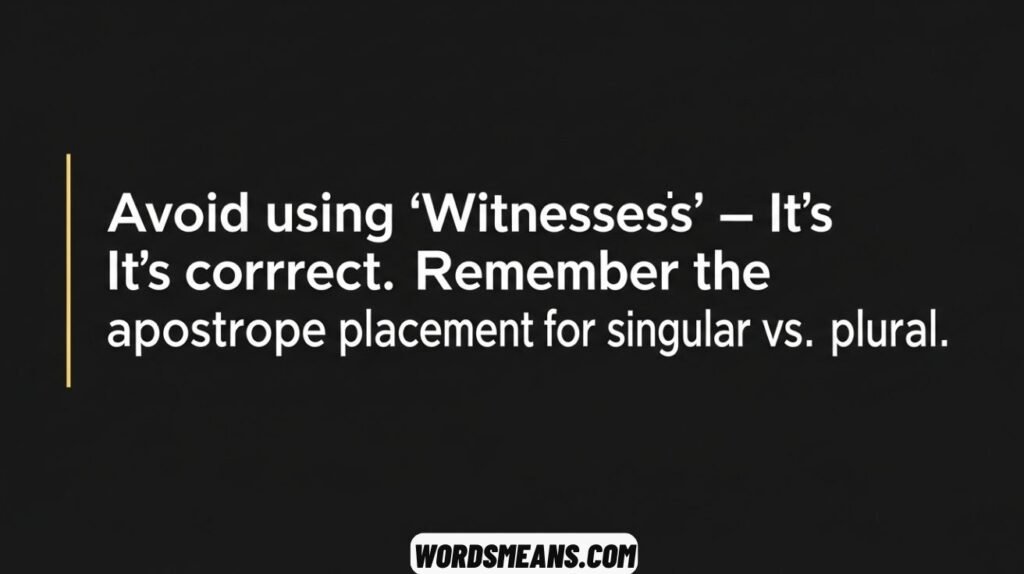
Before diving into possessives, it’s important to understand the difference between witness and witnesses. Witness is the singular form, used when referring to one person who saw or experienced an event. For example, in a courtroom, you might say, “The witness took the stand and began their testimony.” On the other hand, witnesses is the plural form and is used when talking about more than one individual. In legal documents, you might encounter, “Several witnesses provided statements regarding the incident.” This distinction is fundamental because it affects how we form singular possessive and plural possessive forms using a possessive apostrophe.
Knowing whether you are dealing with one witness or multiple witnesses is the first step in maintaining grammatical correctness and clarity in writing. Misidentifying singular and plural forms can lead to confusion, especially in courtroom terminology or legal reporting, where precision is critical.
The Possessive Puzzle: Witness’s or Witness’?
Once we know the singular and plural forms, the next challenge is the possessive. Showing possession with witness often confuses writers. Do we use witness’s or witness’? Both forms are technically correct in certain contexts, but usage preferences vary according to style guides like the Associated Press style and the Chicago Manual of Style. Understanding these rules is essential for correct English usage and clarity in writing.
Possession is indicated by an apostrophe. For a single witness, adding an apostrophe and an “s” forms the singular possessive: witness’s. Some writers, however, prefer witness’, adding only an apostrophe. This choice sometimes depends on the sound that follows or the publication’s style requirements. In professional legal writing or journalist writing, consistency is more important than which form you choose, but witness’s is generally safer and more widely accepted.
Witness’s: The Recommended Choice
Most style guides recommend witness’s for singular possession. This form is used when something belongs to a single witness. For example, in legal documents, you might see, “The witness’s statement was crucial in determining the outcome of the case.” Using witness’s is clear, unambiguous, and conforms to modern grammar rules. The addition of “s” after the apostrophe makes it evident that the possession belongs to one individual.
In terms of professional writing tips, sticking to witness’s ensures your grammar correctness remains consistent. It also helps readers quickly understand the ownership, especially in legal or journalistic contexts where clarity is paramount.
Examples:
“The witness’s testimony was compelling and helped the jury understand the events clearly.”
“The lawyer carefully examined the witness’s credibility before cross-examination.”
“Every witness’s statement was recorded for the trial transcript.”
These examples show how adding ’s creates a singular possessive that is easy to read and understand. This is especially important in courtroom terminology, statement analysis, and legal reporting, where even a small punctuation error can change meaning.
Witness: The Alternative
While witness’s is recommended, some writers use witness’ as an alternative. This form drops the extra “s” and adds only an apostrophe at the end. Many prefer this style when the next word begins with an “s” sound or when following older or traditional English grammar guides. For instance, a newspaper article might read, “The witness’ story changed the course of the investigation.”
However, this form is less common in contemporary legal writing or journalist writing, and it can sometimes be confusing for readers not familiar with this usage. The important takeaway is that apostrophe usage must always clearly indicate possession, regardless of which style you choose.
Examples:
“The witness’ statement was carefully reviewed by the detective.”
“We relied heavily on the witness’ recollection of the events.”
“The judge considered the witness’ testimony during deliberations.”
Notice that in all cases, using an apostrophe, whether in witness’s or witness’, signals ownership or association, which is a key part of showing possession in English.
When There’s More Than One: Witnesses’
When discussing multiple witnesses, we must use the plural possessive form: witnesses’. This is formed by adding an apostrophe after the “s” at the end of the plural word. For example, “The witnesses’ accounts were consistent with each other.”
Using witnesses’ correctly ensures precision in legal documents, statement analysis, and journalist writing. Confusing witnesses (plural) with witnesses’ (plural possessive) can lead to misunderstandings in reporting testimony or summarizing multiple statements.
Examples:
“The witnesses’ testimonies helped establish the timeline of the incident.”
“Investigators collected the witnesses’ statements from the crime scene.”
“The jury carefully reviewed the witnesses’ accounts before reaching a verdict.”
These examples highlight the importance of using the correct plural possessive to maintain clarity in writing and to avoid errors in legal reporting.
See Also : Can I Get a Hoya? Meaning, Origin & How to Use It
Real-World Applications
Understanding the correct use of witness, witness’s, and witness’ is not just about following grammar rules. It has practical significance in real-world settings, from courtrooms to newsrooms. Correct usage ensures clarity, credibility, and professionalism. Misusing possessives can lead to confusion, misinterpretation, or even legal consequences.
In the Courtroom
In a courtroom, precise language is crucial. A single misplaced apostrophe can change the meaning of a legal document or transcript. For instance, stating “The witness’s credibility was questioned” clearly refers to one person, while “The witnesses’ credibility was questioned” refers to multiple individuals. Using the correct form maintains professional writing standards and accurately reflects witness credibility.
In News Reporting
Journalists reporting on trials must use correct English usage to avoid ambiguity. Protecting sources while maintaining grammatical clarity is essential. A headline like “The key witness’s identity remains confidential” immediately informs readers about singular possession, following style guides like the Associated Press style. Proper use of possessive forms ensures that the audience understands the story without confusion.
In Legal Documents
Legal documents rely on punctuation and grammar precision. When drafting affidavits or contracts, using the correct possessive form ensures clarity in writing. Statements such as “All witnesses’ affidavits are attached to the case file” communicate ownership clearly. Misplaced apostrophes can lead to misinterpretation of who owns what, affecting the legal validity of the document.
Common Pitfalls to Avoid
Many writers make mistakes with singular vs plural, possessive apostrophes, and plural forms. Common pitfalls include confusing witness’s with witness’, omitting the apostrophe entirely, or incorrectly adding extra “s” to plural forms. Avoiding these errors improves grammatical correctness and ensures professional communication in legal writing, journalist writing, and formal documentation.
Pro Tips for Perfect Usage of Witness or Witness’s or Witness
Understanding context is key. First, determine whether you are discussing one witness or multiple witnesses. Next, choose a consistent style for singular possessives, preferably witness’s, and stick with it throughout your document. Reading your sentences aloud can help identify awkward forms and improve clarity in writing. Following these simple writing tips can greatly enhance your professional and legal communication.
Why It Matters?
Using witness, witness’s, and witness’ correctly is about more than impressing readers. It ensures precision in legal reporting, credibility in journalist writing, and clear communication in any professional document. Proper use demonstrates attention to detail, mastery of English grammar guides, and respect for the standards of professional writing tips.
Putting It All Together
Here is a quick reference table summarizing the forms and usage of witness, witness’s, witness’, and witnesses’:
| Form | Usage | Example |
| Witness | Singular | The witness took the stand. |
| Witnesses | Plural | Several witnesses came forward. |
| Witness’s / Witness’ | Singular Possessive | The witness’s testimony was crucial. |
| Witnesses’ | Plural Possessive | The witnesses’ accounts were consistent. |
By following these rules, you ensure correct English usage, maintain clarity in writing, and strengthen your professional and legal documents. Precision with possessive apostrophes, singular vs plural forms, and proper statement analysis will help you avoid confusion and present information clearly and professionally.
Understanding the Role of a Witness in Legal Writing
A witness is someone who sees or experiences an event firsthand. In legal documents and courtroom terminology, their statements provide crucial evidence. Properly writing about a witness ensures clarity, maintains credibility, and avoids confusion in reports or filings. Writers must know the difference between singular and plural forms.
Accurately distinguishing between witness and witnesses is the first step in professional writing tips. Adding a possessive apostrophe correctly, such as witness’s or witness’, shows ownership and maintains grammatical correctness. Following style guides like the Associated Press style or Chicago Manual of Style ensures that your writing meets professional and legal standards.
See Also : Hastle or Hassle? Which is Correct?
Singular vs Plural: Witness and Witnesses Explained
The word witness refers to a single individual, while witnesses refers to multiple people. This distinction is crucial in legal reporting, journalist writing, and statement analysis. Misidentifying singular and plural forms can create ambiguity, especially in courtroom terminology, where accuracy is critical for understanding testimony.
Using the correct form is also essential in English grammar guides. Adding a possessive apostrophe to the singular or plural form signals ownership. For example, a single witness’s statement versus the multiple witnesses’ accounts. Knowing this difference improves clarity in legal documents, ensures correct English usage, and prevents errors in professional or journalistic writing.
The Possessive Puzzle: Witness’s or Witness’?
Many writers struggle with whether to use witness’s or witness’. The choice depends on singular or plural forms and stylistic preferences. Grammar rules state that witness’s is widely accepted for singular possessive. Style guides, including the Chicago Manual of Style, recommend it for clarity and professional legal writing.
The alternative, witness’, is less common but sometimes used when the next word begins with “s.” Both forms are correct if consistently applied. Using the proper form ensures that journalist writing, legal documents, and any professional writing tips meet high standards for clarity in writing and grammatical correctness.
Why Witness’s is the Recommended Choice
Most style guides favor witness’s as the singular possessive because it is clear and unambiguous. Adding ’s signals ownership, which is critical in courtroom terminology and statement analysis. For example, “The witness’s testimony was vital.” It is easy to read and follows traditional English grammar guides.
In addition, using witness’s ensures clarity in writing for legal professionals, journalists, and writers. Following the Associated Press style or Chicago Manual of Style helps avoid mistakes. Proper apostrophe usage improves readability and reflects professionalism in legal reporting, journalist writing, and other professional writing tips.
The Alternative: Using Witness’ in Writing
Some writers prefer witness’ as a singular possessive. It adds only an apostrophe and omits the extra “s.” This style is acceptable in some English grammar guides and journalist writing, particularly when the next word begins with “s.” However, it is less common in legal writing and professional writing tips.
While both witness’s and witness’ are correct, consistency matters most. In courtroom terminology and legal documents, improper use can confuse readers or misrepresent ownership. Choosing one style and sticking with it improves clarity in writing, grammatical correctness, and overall professionalism in legal reporting and statement analysis.
See Also : Fishing in the Dark – Its Meaning, Origin and Usage
Plural Possessive: When to Use Witnesses’
When referring to more than one witness, the correct form is witnesses’. Adding the apostrophe after the “s” shows plural possession. For example, “The witnesses’ statements were consistent.” Correctly using this form is essential in legal documents, courtroom terminology, and journalist writing.
Incorrectly using witnesses without the apostrophe or confusing it with singular forms can create ambiguity. Proper use of witnesses’ follows grammar rules and English grammar guides, ensuring clarity in legal reporting, professional statement analysis, and any professional writing tips where precision is required.
Common Mistakes Writers Make with Witness Possessives
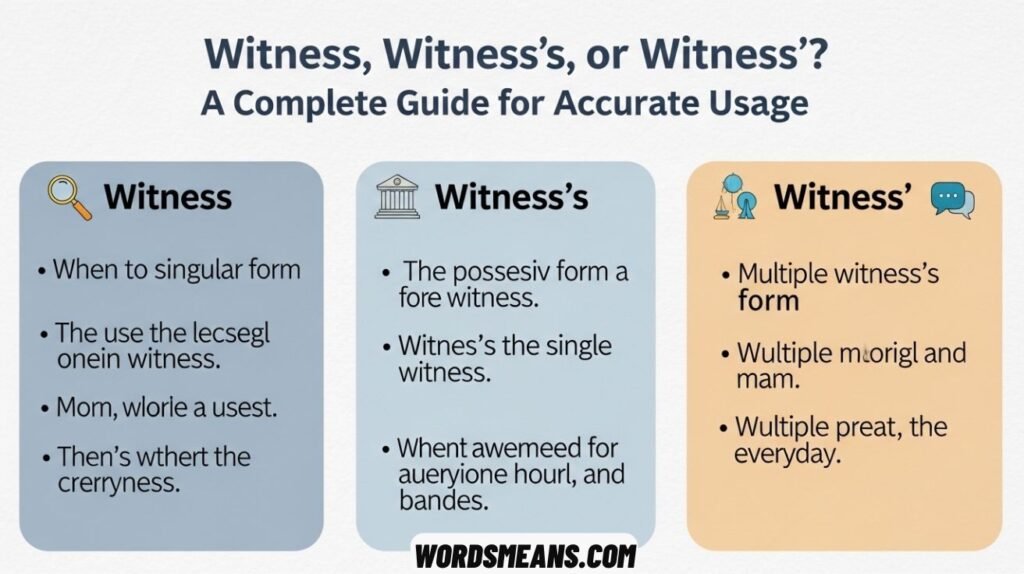
Writers often confuse singular vs plural possessives, forgetting apostrophes or adding extra letters. Using witness’s instead of witness’, or vice versa, is a frequent error. Similarly, forgetting the apostrophe in witnesses’ is common. These mistakes reduce clarity in legal writing and journalist writing.
Professional writers must follow style guides like Associated Press style and Chicago Manual of Style. Paying attention to punctuation, plural forms, and possessive apostrophe usage ensures correct English usage, improves clarity in writing, and maintains credibility in legal reporting and statement analysis.
Putting It All Together: Tips for Perfect Usage
To master witness, witness’s, witness’, and witnesses’, always check whether you are using singular or plural. Use witness’s for singular possessive, witness’ as an alternative, and witnesses’ for plural possessive. Following these rules ensures professional legal writing, journalist writing, and statement analysis.
Consistency is key. Refer to English grammar guides and style guides to maintain grammatical correctness. Reading aloud can also help confirm natural flow. Understanding possessive apostrophe, plural forms, and showing possession correctly improves clarity in writing, professional writing tips, and accuracy in legal reporting and court documents.
FAQs
Which is the correct plural possessive?
The correct plural possessive is witnesses’, with an apostrophe after the “s.”
Can witness be plural?
Yes, the plural of witness is witnesses.
What are the three forms of witness?
The three forms are witness (singular), witnesses (plural), and witness’s / witness’ (singular possessive).
What is the second form of witness?
The second form is witnesses, which is the plural.
Conclusion
Understanding Witness’ or Witness’s is very important for writing correctly. A single witness uses witness’s to show something belongs to them. When more than one person is involved, the plural witnesses’ shows ownership. Using the right form makes writing clear and easy to understand. It also helps readers know exactly who owns the testimony or statement.
Following the rules for Witness’ or Witness’s helps in school work, reports, and legal writing. Writers who use these forms correctly look careful and professional. Correct apostrophe usage improves clarity and shows respect for grammar rules. Practicing these forms will make anyone confident in writing about witnesses in any situation.