Pre vs Post: Which Prefix to Use?
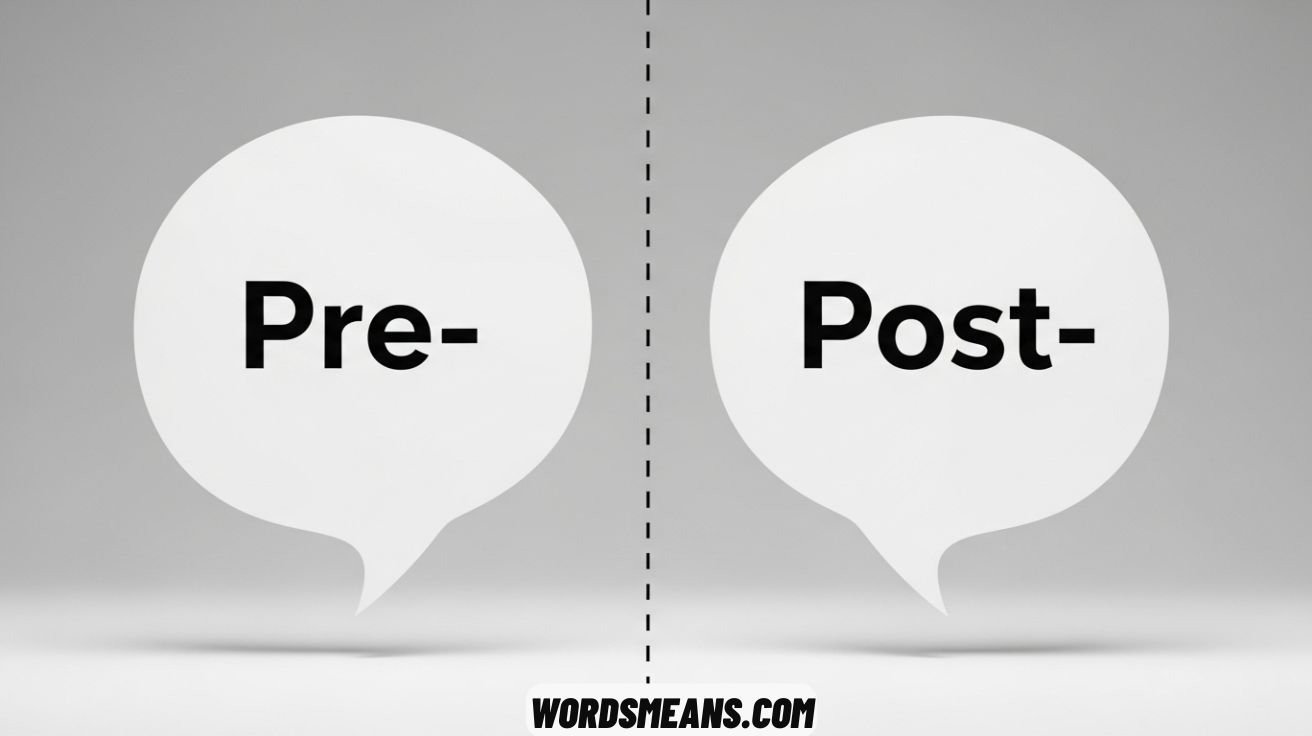
Pre vs Post are small prefixes in English. Pre means before. Post means after. These prefixes change the meaning of words. They help show when something happens. Words like pretest and postgame use these prefixes to tell timing. Understanding Pre vs Post makes reading and writing easier.
These prefixes are everywhere in life. You see them in school, work, and daily activities. Knowing Pre vs Post can save time. It helps you understand events quickly. Using them correctly makes your sentences clear. Small words can make a big difference.
Pre vs Post helps organize actions. Pre is used for planning and preparation. Post is used for results or follow-up. They show order in stories, instructions, and routines. Learning these prefixes improves writing and speaking. They make English simple and easy to understand.
Tiny Prefixes, Big Impact

It is surprising how two small prefixes, pre and post, can have such a significant effect on meaning. These prefixes act as markers of time, making it clear whether something happens before or after a particular event. Think of them as guideposts in communication. By using pre and post definition, we add a sense of order and clarity to our sentences.
In word formation in English, the addition of a prefix transforms a simple word into something more specific. For instance, the word “test” becomes pretest, indicating an assessment conducted before instruction begins. Similarly, “game” becomes postgame, highlighting analysis or discussion after the event. This is a perfect example of how timing in language is guided by prefixes.
In writing, these prefixes allow us to create timeline expressions that help readers understand the order of events. Without them, explanations would require much longer sentences. Instead of saying “before the meeting,” we simply say pre-meeting, and instead of “after dinner,” we use post-dinner. These small additions carry big meaning, proving that even tiny prefixes can have a profound impact on language structure.
Pre and Post: Tiny Words, Big Impact!
Adding pre or post to a word is like giving it a temporal identity. These prefixes do not just sit at the start of a word; they define when something happens. Using them correctly is a key part of using pre and post correctly in English. For example, a preoperative checklist in healthcare ensures that all preparations happen before surgery, while postoperative care focuses on recovery after the operation.
In education, pre-school refers to learning before formal schooling begins, while post-graduate studies are pursued after earning a college degree. These are more than just words; they are practical tools that allow us to plan, prepare, and reflect. Understanding the difference between pre and post ensures that our sentences are precise and meaningful.
A quote from linguist David Crystal captures this perfectly: “Language is the roadmap of thought, and prefixes are the road signs of time.” By mastering English grammar prefixes, we can make our communication smoother and more accurate, whether in writing or speaking.
Understanding Pre and Post
The prefix pre is simple but powerful. It means “before” and is used to show that something happens in advance of a main event. Words like preseason and preview are excellent examples. Preseason training prepares athletes for the main competitive season, while a preview allows audiences to see something before it is officially released.
On the other hand, post signals that something happens afterward. Postseason games occur after the regular season ends, and a postcard is typically sent after visiting a location. These distinctions are part of before and after words, which are central to conveying clear meaning in English. By understanding the pre vs post meaning, writers and speakers can communicate sequences without lengthy explanations.
In addition, grammar tips for prefixes suggest remembering simple associations: “pre” for preparation or things that come first, and “post” for results or follow-up. This helps reinforce planning and follow-up terms in both professional and casual contexts.
While Handy, Not Quite Antonyms
Although many people assume pre and post are opposites, they are not strict antonyms. Instead, they function as markers along a timeline, each indicating a distinct point. They work together to tell a complete story.
For example, in a business setting, a pre-meeting agenda sets expectations, while post-meeting minutes reflect outcomes. Similarly, in healthcare, preoperative care ensures everything is ready before surgery, and postoperative care supports healing afterward. Understanding this nuance is key to organizing events in writing and clearly showing the sequence of actions in any context.
Let’s Get Practical!
In daily life, the use of pre and post is everywhere. Children attend preschool before their formal education begins, while students might pursue postgraduate degrees after earning a bachelor’s degree. Meals might involve pre-cooking preparation or post-dinner activities like cleaning. Letters may include a postscript after the main message. Similarly, products may be prepaid or postpaid, indicating payment before or after use. Even in sports, preseason and postseason mark the start and end of competitive schedules. These examples highlight how educational examples of prefixes and everyday usage combine to make sequence of events in writing simple and understandable.
Pre vs Post: The Differences Made Clear
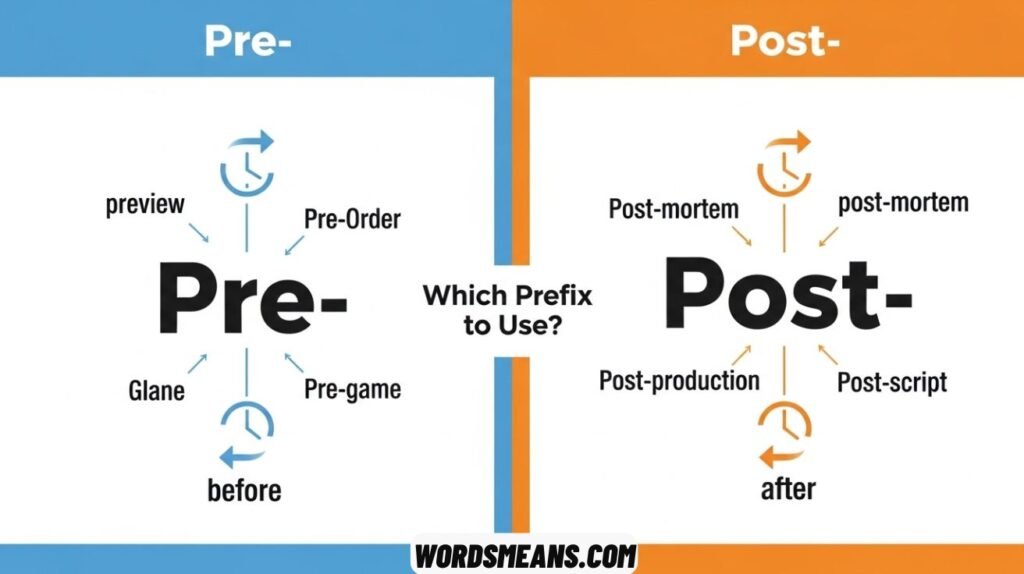
To better understand the distinction, consider the following table:
| Aspect | Pre | Post |
| Basic Meaning | Happens before something | Happens after something |
| Common Use | Shows planning and preparation | Shows results and follow-up |
| Time Period | Before the main event | After the main event |
| Real Examples | Pre-wedding photos, Preseason training, Premade meals | Post-game analysis, Post-holiday sales, Post-workout stretches |
| Easy Way to Remember | Think “prepare” – you do it before | Think “postpone” – you do it later |
| Usage in Writing | Shows what comes first | Shows what follows |
| Key Purpose | Sets up expectations | Reflects on outcomes |
This table makes it clear that pre and post definition is not just academic; it has direct, practical implications in everyday communication. By recognizing pre prefix examples and post prefix examples, we can enhance clarity, precision, and style in writing.
Origins of ‘Pre’ and ‘Post’

Understanding the history of these prefixes adds depth to their usage. The prefix pre originates from Latin “prae,” meaning “before” or “in front of.” It entered English through French during the 1300s and has retained its essential meaning for centuries. Similarly, post comes from Latin “post,” meaning “after.” It traveled through Old French before becoming part of English vocabulary around the 14th century. Knowing the Latin origins of pre and post helps us appreciate the consistency and value of these small but powerful words in word prefixes in linguistics and overall language structure.
Pre:
The prefix pre has been used historically to indicate preparation or anticipation. From ancient Latin texts to modern usage, it has maintained its role in organizing time. Words like preempt, prearranged, and precondition all illustrate how prefix usage in English preserves the idea of “before.”
Post:
The prefix post was widely used in Latin to indicate sequences that occur afterward. Phrases like “post meridiem” (p.m.) are early examples of pre vs post meaning in context. Modern words like postmortem, postscript, and postproduction continue to emphasize events occurring after a reference point, showing continuity from ancient to modern English.
Examples in Context
Understanding pre and post definition is easiest when we look at practical examples.
In the Kitchen:
Cooking requires careful timing. Pre-heating the oven ensures food cooks properly, while post-cooking tasks include cleaning or checking the results. This demonstrates planning and follow-up terms in a very literal sense.
In Education:
Preschool introduces children to learning before regular schooling begins. Postgraduate studies allow students to continue learning after a college degree. These examples illustrate educational examples of prefixes and highlight sequence of events in writing.
In Healthcare:
In hospitals, preoperative care prepares patients for surgery, ensuring safety and efficiency. Postoperative care focuses on recovery and monitoring after the procedure. These are critical examples of preoperative and postoperative stages in medical practice.
In Business:
Businesses often rely on preparation and reflection. A pre-meeting agenda helps organize discussions, while post-production work finalizes projects after filming or recording. Planning and follow-up terms in business communication show the value of these prefixes.
In Daily Life:
Everyday tasks are also structured by these prefixes. Paying for services can be prepaid before use or postpaid afterward. Exercise routines may include warm-ups (pre-workout) and cool-downs (post-workout). By applying timeline expressions, we naturally see how English grammar prefixes help organize time.
See Also : Cacoon or Cocoon: Which Spelling is Correct?
How Pre and Post Change Word Meaning
The prefixes pre and post are small but powerful in English. Adding pre to a word tells us that something happens before an event, like pretest or prepaid. On the other hand, post marks actions or events that happen afterward, such as postgame or postgraduate. These tiny additions completely change a word’s meaning, helping readers or listeners understand timing instantly.
Using these prefixes correctly is essential for clear communication. They allow writers to organize thoughts without using long explanations. In professional writing, education, or daily life, English grammar prefixes like pre and post guide readers through the timeline of events efficiently and accurately.
Understanding the Pre Prefix

The prefix pre comes from Latin “prae,” meaning “before.” It is used to indicate that something happens ahead of time. Words like preseason, preview, and preoperative show actions or events occurring prior to a main event. Understanding pre prefix examples helps learners see how timing is built into English words naturally.
Pre is also helpful in planning and preparation. For instance, in education, a pretest evaluates what students know before starting lessons. In cooking, pre-heating the oven ensures proper cooking. Recognizing timing in language through the pre prefix makes communication precise and organized.
Understanding the Post Prefix
The prefix post originates from Latin “post,” which means “after.” It is used to describe actions or events that occur later than the main event. Examples include postscript, postgraduate, and postoperative. Using post prefix examples helps convey clarity about what happens afterward without extra explanation.
In everyday life, post is essential for reflection or follow-up. For example, post-dinner cleaning occurs after meals, and post-production in filmmaking refers to editing after shooting. Understanding pre vs post meaning in these cases helps organize events in writing and speech effectively.
Pre vs Post in Daily Life
We encounter pre and post constantly in daily activities. Paying for utilities can be prepaid or postpaid, indicating timing of payment. Exercise routines include pre-workout warm-ups and post-workout stretches. Recognizing these patterns helps organize life efficiently.
Even in social events, these prefixes guide expectations. Pre-dinner drinks happen before a meal, while post-dinner conversations occur afterward. Understanding sequence of events in writing is not just for grammar—it mirrors real life, showing how small prefixes structure time and make communication smooth and precise.
See Also : 210+ Good Roasts That Hurt Badly (Savage, Clever
Pre and Post in Education
Education uses pre and post prefixes extensively. Preschool prepares children for formal learning, giving them a foundation before starting school. Postgraduate studies allow learners to continue after completing their undergraduate degrees. These educational examples of prefixes demonstrate how English organizes time and learning.
Tests also use these prefixes. Pretests check knowledge before a course, while post-tests evaluate understanding afterward. Teachers rely on planning and follow-up terms to structure lessons effectively. Understanding pre and post definition ensures students know what comes first and what follows in educational sequences.
Pre and Post in Healthcare
Healthcare professionals use these prefixes to manage patient care. Preoperative procedures include checks and preparation before surgery. Postoperative care focuses on recovery, monitoring, and rehabilitation afterward. These preoperative and postoperative stages are essential for patient safety and treatment success.
Even in public health, pre- and post- assessment ensures readiness and evaluation. Pre-vaccination instructions guide patients before treatment, while post-vaccination care monitors effects. Learning grammar and vocabulary through these examples shows that language mirrors real-world organization, emphasizing the value of timing in medical practice.
Pre and Post in Business and Work
In business, pre- and post- actions organize workflow. A pre-meeting agenda prepares participants for discussion, while post-meeting minutes summarize results. These steps improve productivity and ensure accountability. Recognizing planning and follow-up terms through prefixes saves time and clarifies communication.
Marketing also relies on pre- and post- activities. Pre-launch campaigns create awareness before a product release, while post-launch reports analyze performance afterward. Understanding word prefixes in linguistics helps professionals convey timing effectively, ensuring clear sequences in business documentation and communication.
See Also : White Heart Emoji Meaning and When to Use
Why Learning Pre vs Post Matters
Mastering pre and post strengthens writing, speech, and comprehension. Using English grammar prefixes correctly allows readers to instantly understand order and timing, whether in recipes, education, or work. It simplifies communication and reduces confusion.
These prefixes also teach organization and sequencing. By recognizing before and after words, learners gain insight into how English structures ideas logically. From professional writing to daily conversation, knowing pre vs post meaning ensures clarity, making communication more precise, efficient, and engaging for both writers and readers.
FAQs
What is the difference between pre and post?
Pre means before an event, while post means after an event.
Is post before or after?
Post always means after something.
What is the difference between pre and ante?
Pre and ante both mean before, but pre is common in modern English, while ante is mostly used in formal, legal, or Latin-based contexts.
How to use pre and post in a sentence?
“She completed a pretest before the course” and “He wrote a postscript after the letter.”
Conclusion
Understanding Pre vs Post helps us know when things happen. Pre tells us something comes before, like pre-school or pretest. Post shows something comes after, like post-dinner or postgame. Using these prefixes correctly makes writing clear and easy to understand. They help organize events, actions, and ideas in the right order. Everyone can use them in daily life.
Pre vs Post is simple once we practice. These prefixes show timing in school, home, or work. They make sentences shorter and easier to read. Learning Pre vs Post improves writing, speaking, and reading. Knowing when to use pre and post gives us control over words. Using them makes communication clear, neat, and correct.