To Short or Too Short? Grammar Explained
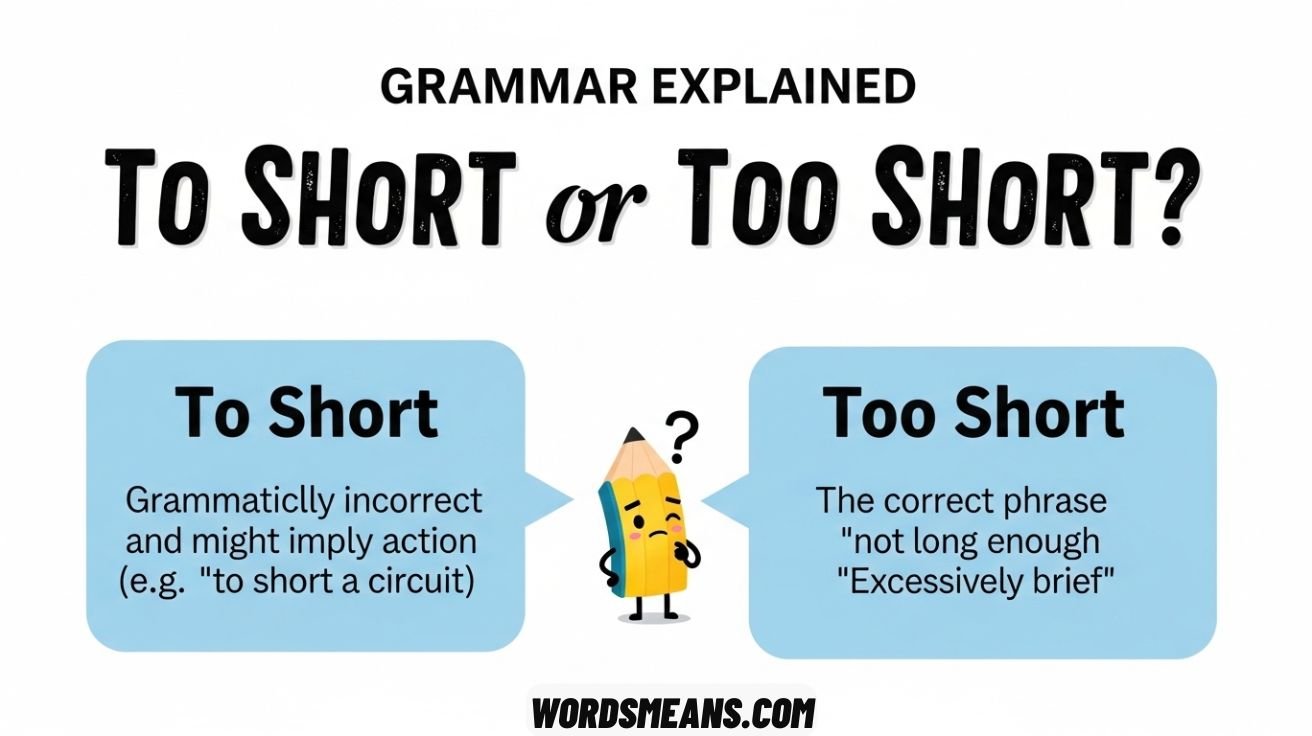
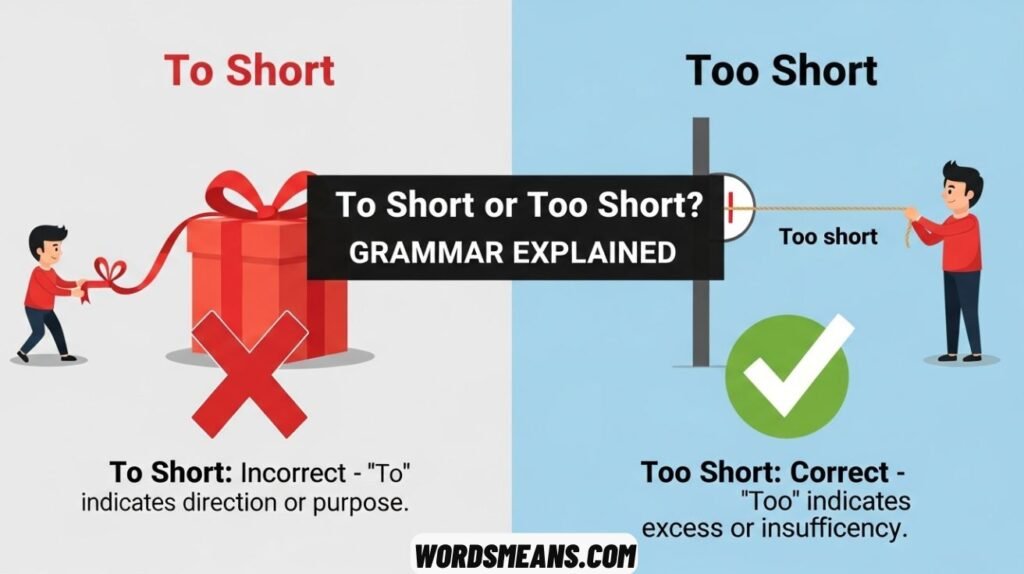
“To Short or Too Short” is a common grammar confusion in English. “Too short” means not long enough. “To short” is always incorrect in writing.
Many students write “to short” without noticing the mistake. This small error can change how others see your writing. Learning the right form makes your English stronger.
The difference between these words is simple but important. “Too” shows excess, while “to” shows direction or action. Understanding “To Short or Too Short” helps you write clearly and correctly.
To vs too: What’s the difference?
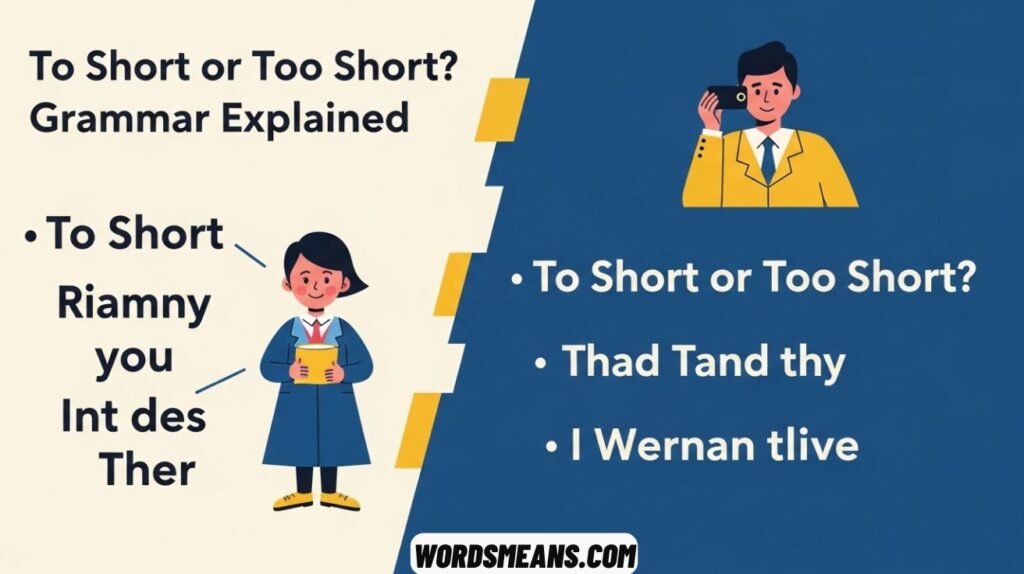
Understanding the difference between to and too is the key to solving the “to short or too short” confusion.
The word “to” is usually a preposition or part of an infinitive verb. The word “too” is an adverb. This is where the preposition vs adverb difference becomes important. Knowing the parts of speech explanation helps you choose the correct word.
Here is a simple comparison table to explain the to vs too explanation clearly:
| Word | Part of Speech | Meaning | Example |
| To | Preposition / Infinitive marker | Shows direction or action | I am going to school. |
| Too | Adverb | Means excessively or also | The shirt is too short. |
| Two | Number | The number 2 | I have two books. |
This table also shows the common confusion of to vs too vs two, which are classic homophones in English. These words sound the same but have different meanings and spellings. This leads to many common writing errors in English.
When someone writes “The dress is to short,” they are not following basic English grammar rules. The correct phrase is “The dress is too short.”
The Root of the Problem
The main reason people confuse “to” and “too” is pronunciation. They sound exactly the same. These are called homophones in English, and they are responsible for many spelling mistakes.
This kind of grammar confusion to and too happens because our brain processes sound before spelling. In speech, no one can hear the difference. But in writing, spelling matters.
Another reason is fast digital communication. Texting and social media encourage quick typing without careful editing. This leads to more English grammar mistakes and weakens writing clarity improvement.
Even spell-check tools often fail to catch this mistake because both “to” and “too” are real words. This is why learning the rule is better than relying only on software.
Breaking Down “To” and “Too”
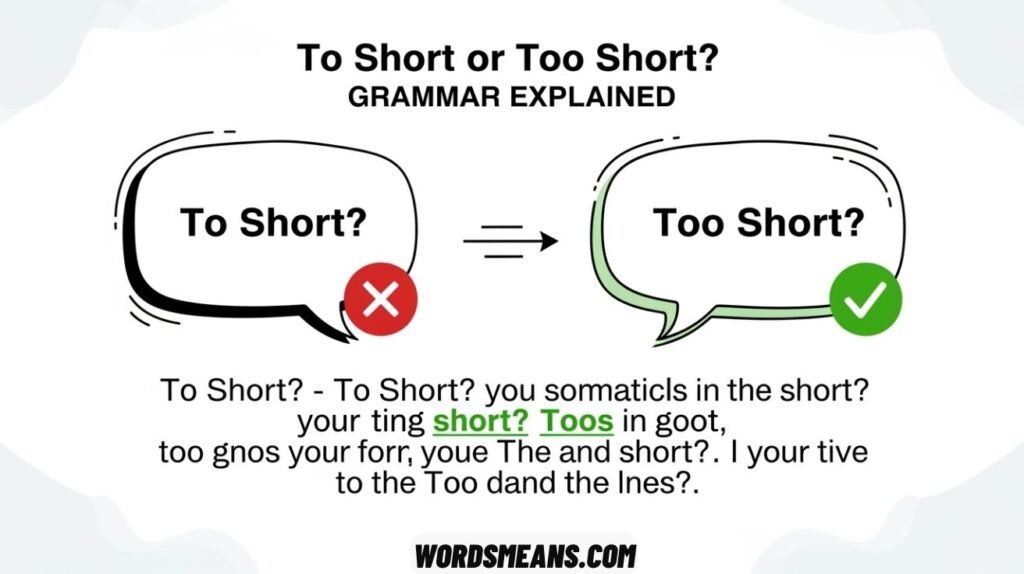
To understand the proper use of to and too, we need a deeper look at how each word works in a sentence.
“To” functions mainly as a preposition or as part of an infinitive verb. Examples of infinitive verb examples include “to run,” “to study,” and “to write.” In these cases, “to” is not describing anything. It is helping form the verb.
“Too,” on the other hand, is an adverb. Understanding adverb usage in English helps you master this rule. An adverb modifies a verb, adjective, or another adverb. In the phrase “too short,” the word “too” modifies the adjective “short.” This is called modifying adjectives with adverbs.
This difference explains why “to short” is grammatically incorrect. A preposition cannot modify an adjective.
Practice Makes Perfect
Learning grammar is not just about reading rules. Practice helps your brain recognize patterns automatically. This is one of the best grammar tips for beginners.
If you create your own sentence correction examples, you will start noticing errors quickly. For example, write five sentences using “too short” correctly. Then try replacing “too” with “excessively.” If the sentence still makes sense, you are using it correctly.
For example, “The movie was too short” becomes “The movie was excessively short.” This test shows the excessive meaning in grammar clearly.
With regular practice, you will naturally avoid common grammar mistakes.
When to Use “Too Short”
The phrase “too short” is used when something is shorter than needed, expected, or appropriate. This explains the too short meaning in simple terms.
If you are asking when to use too short, remember this rule: use “too short” when you mean “excessively short” or “not long enough.”
Here are several examples of too short in a sentence written in full context.
The skirt is too short for the office dress code.
The meeting was too short to discuss all the issues.
His explanation was too short to understand the topic fully.
These are clear too short sentence examples that follow proper grammar.
If you ever wonder, is to short correct, the answer is no. It is always incorrect when describing length.
See Also : 36 Unique Ways to Say “Have a Good Day” Professionally
The Role of “Too” as a Modifier
In grammar, “too” acts as an adverb. It changes the meaning of the adjective it describes. In “too short,” the word “too” gives an excessive degree meaning to “short.”
Understanding this concept improves your knowledge of grammar rules for too. The word “short” alone is neutral. When you add “too,” it shows dissatisfaction or a problem.
Compare these two sentences:
The speech was short.
The speech was too short.
The second sentence shows that the length was a problem. This demonstrates the correct use of too.
Examples in Context
Let us explore real-life American examples to make this rule clearer.
In fashion, someone might say the jeans are too short for winter weather in Chicago. In school, a teacher might say an essay is too short to meet the word count requirement. In business, a manager might say the presentation was too short to explain the proposal clearly.
These examples show how the phrase is used in daily American life. They also help with writing clarity improvement because readers clearly understand the problem being described.
The Incorrect “To Short”
The phrase “to short” does not follow English grammar rules. A preposition cannot modify an adjective. Therefore, “to short” is grammatically wrong.
This mistake appears often online because of spelling differences in English and confusion caused by homophones examples.
Here is a comparison table showing correct and incorrect forms:
| Incorrect | Correct |
| The dress is to short. | The dress is too short. |
| My hair is to short. | My hair is too short. |
| The movie was to short. | The movie was too short. |
Seeing these sentence correction examples helps reinforce the correct spelling.
Applying the Rule
To apply the rule confidently, try the substitution method. Replace “too” with “excessively.” If it fits, then “too” is correct.
For example, “The rope is excessively short.” This sounds correct. Therefore, “The rope is too short” is correct.
You can also rephrase the sentence. Instead of saying “The article is too short,” say “The article is not long enough.” This strategy helps you understand the meaning clearly.
These simple techniques act as practical proofreading tips and useful punctuation and grammar tips.
How to Correctly Use “Too Short” and Avoid Common Mistakes
To master this rule, slow down when proofreading. Many mistakes happen during fast typing. Reading your writing aloud can help you catch errors.
Improving your understanding of adverb usage in English and reviewing a reliable grammar guide for students can strengthen your foundation.
Writers who pay attention to grammar appear more professional. This is especially important in American workplaces and universities.
What Does “Too” Mean in Different Contexts?
The word “too” has two main meanings. It can mean excessively, or it can mean also. Understanding the also vs too difference is essential.
When “too” means excessively, it shows a problem. When it means also, it adds information.
For example, “The coffee is too hot” shows excess. “I want coffee too” means I also want coffee.
See Also : 25 Best Ways to Say Hope You Had a Great Weekend
What Are Homophones?: Pronunciation vs. Spelling
Homophones are words that sound the same but have different meanings and spellings. The trio “to, too, two” is one of the most common homophones in English.
These words create confusion because spoken English does not show spelling differences. This leads to frequent common writing errors in English.
Learning the meanings carefully improves your English writing skills and strengthens your understanding of basic English grammar rules.
Too vs to: simple tips to help you remember
A simple memory trick is to remember that “too” has an extra “o.” That extra “o” stands for extra or excessive. This helps you remember how to spell too short correctly.
Another tip is to think about meaning. If you mean direction or an action, use “to.” If you mean excessively or also, use “too.”
With practice, you will master the proper use of to and too and feel confident in your writing.
Important Queries
Is too short grammatically correct?
Yes, “too short” is grammatically correct. It follows standard American grammar rules. The word “too” is correctly used as an adverb modifying the adjective “short.”
What is a word for too short?
Words such as brief, undersized, compact, or insufficient can sometimes replace “too short,” depending on context. However, each word has a slightly different meaning.
How short is too short for shorts?
In American fashion guidelines, shorts are usually considered too short if they rise far above mid-thigh or feel inappropriate for the setting. In professional or school environments, modest length is expected. Context matters.
Why “To Short or Too Short” Is a Common Grammar Mistake in the USA
Many Americans struggle with the phrase “to short or too short” because it sounds identical when spoken. Since English relies heavily on context, people often write words based on sound rather than grammar rules. This leads to confusion in emails, school essays, social media posts, and even professional documents. The mistake happens quickly, especially when typing fast or relying on autocorrect tools that do not catch homophone errors.
In American classrooms, grammar instruction sometimes focuses more on reading comprehension than spelling precision. As a result, students may understand meaning but still confuse small words like “to” and “too.” Because both words are correct spellings individually, spell-check software rarely flags the mistake, allowing it to pass unnoticed in everyday writing.
Understanding the Difference Between “To” and “Too”
The difference between “to” and “too” becomes clear when you understand their grammatical roles. “To” usually functions as a preposition that shows direction, such as “go to school.” It can also appear in infinitive verbs like “to study” or “to write.” In both cases, “to” connects parts of a sentence but does not describe the quality of something.
“Too,” on the other hand, is an adverb. It either means “also” or shows excess. When you say something is “too short,” you mean it is excessively short. This small extra letter changes the meaning entirely. Learning this difference strengthens writing clarity and helps avoid one of the most common grammar mistakes in English.
When to Use “Too Short” in a Sentence
You should use “too short” when something does not meet the expected length or standard. For example, if an essay does not reach the required word count, it is too short. If a dress does not follow workplace dress codes, it may be considered too short. In both cases, the word “too” shows that there is a problem with the length.
The key idea is excess or insufficiency. “Too short” means not long enough for the situation. You can test your sentence by replacing “too” with “excessively.” If the sentence still makes sense, you are using it correctly. This simple trick helps writers feel more confident about their grammar choices.
Why “To Short” Is Always Incorrect
The phrase “to short” is grammatically incorrect because “to” cannot modify an adjective. In English grammar, a preposition like “to” does not describe qualities such as length, height, or size. Only adverbs can modify adjectives. Therefore, “too short” is correct because “too” is an adverb describing “short.”
Writers often make this error due to pronunciation similarities. However, grammar rules remain clear and consistent. Understanding parts of speech helps prevent this mistake. Once you remember that “too” carries the meaning of excess, it becomes easier to recognize why “to short” does not make sense in any proper sentence structure.
See Also : Pre vs Post: Which Prefix to Use?
Real-Life Examples of “Too Short” in American English
In everyday American life, you will hear phrases like “The meeting was too short” or “My sleeves are too short for winter.” These sentences express dissatisfaction or limitation. They show that the length was not sufficient for the need. This usage appears frequently in school, business, and casual conversation.
You may also see examples in online reviews. Someone might write, “The movie was too short for the ticket price.” These real-life contexts help learners understand how natural and common the phrase is. Seeing it used properly reinforces correct spelling and builds stronger English writing habits over time.
The Role of Adverbs in “Too Short”
To understand why “too short” is correct, it helps to study adverbs. Adverbs modify verbs, adjectives, or other adverbs. In this case, “too” modifies the adjective “short.” It tells us the degree of shortness. This is called expressing excessive degree in grammar.
Without the adverb, the sentence remains neutral. For example, “The presentation was short” simply states a fact. When you say, “The presentation was too short,” you show dissatisfaction. This small grammatical shift changes tone and meaning. Learning how adverbs work improves clarity and strengthens overall writing skills.
How Homophones Cause Confusion in Writing
Homophones are words that sound the same but have different meanings and spellings. “To,” “too,” and “two” are classic examples in English. Because they sound identical in conversation, many writers choose the wrong spelling when typing quickly. This confusion is extremely common among both students and adults.
The challenge becomes greater in digital communication. Text messages and social media posts are often written without careful proofreading. Since spell-check tools do not detect homophone mistakes, errors remain unnoticed. Developing awareness of these words and their meanings helps writers avoid embarrassing grammar issues in professional settings.
Simple Memory Tricks to Avoid the Mistake
One of the easiest ways to remember the correct spelling is to focus on the extra “o” in “too.” That extra letter represents “extra” or “excess.” If something is too short, it has an excessive problem with length. This visual memory trick works well for many learners.
Another helpful strategy is to pause and reread your sentence slowly. Ask yourself whether you are describing direction or excess. If you mean excessive length or degree, choose “too.” Building this habit improves proofreading skills and helps eliminate one of the most frequent grammar errors in everyday English writing.
FAQs
When to use too or to?
Use “to” for direction or as part of a verb, such as “to go” or “to study.”
Use “too” when you mean excessively or also in a sentence.
Which is correct: to long or too long?
The correct phrase is “too long” because “too” shows excess.
“To long” is grammatically incorrect in standard English.
Is it way to short or way too short?
The correct phrase is “way too short.”
“Way” emphasizes “too,” which expresses excessive degree.
Is too short an adverb?
“Too” is an adverb that modifies the adjective “short.”
In the phrase “too short,” only “too” functions as the adverb.
Conclusion
Many students feel confused about To Short or Too Short, but the rule is simple. You use “too short” when something is not long enough. The word “too” shows excess. The word “to” shows direction or helps form a verb. This small spelling change creates a big meaning difference in writing.
When you learn this rule, your writing becomes clearer and stronger. Teachers, classmates, and employers notice careful grammar. Good grammar shows discipline and focus. Practice this rule often and read your sentences slowly. With steady effort, you will master To Short or Too Short and improve your English skills every day.