Cacoon or Cocoon: Which Spelling is Correct?
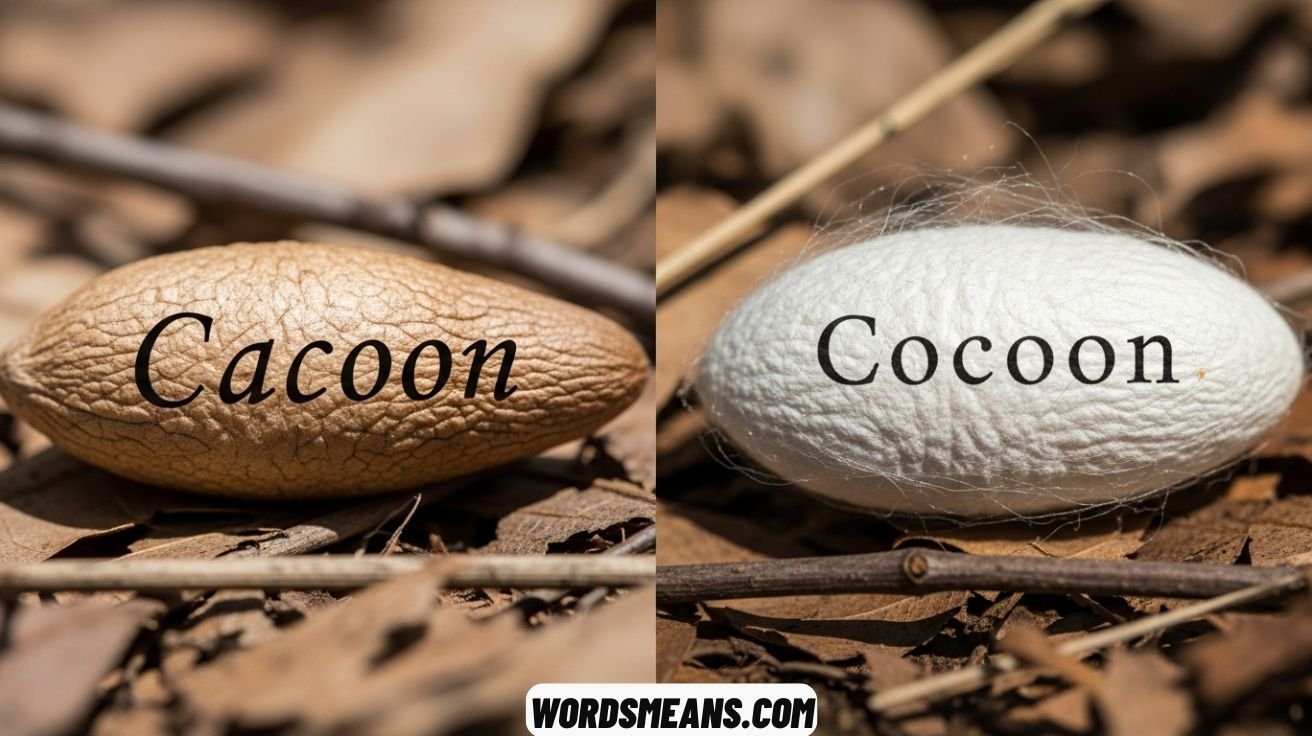
Cacoon or Cocoon is a word that can confuse people. A cocoon is a protective shelter made by insects like caterpillars and silkworms. A cacoon is a tropical bean from the plant Fevillea cordifolia. These words sound the same but have very different meanings.
Many people write cacoon when they mean cocoon. This mistake happens in school, online, and in books. Knowing the correct spelling helps you write better. Using the right word shows you understand the meaning clearly.
Cacoon or Cocoon is used in nature and everyday life. Cocoon also describes safe spaces, like cocoon chairs or cozy homes. Cacoon appears in botanical studies and craft works. Learning the difference helps everyone read and understand easily.
Why is There Confusion?
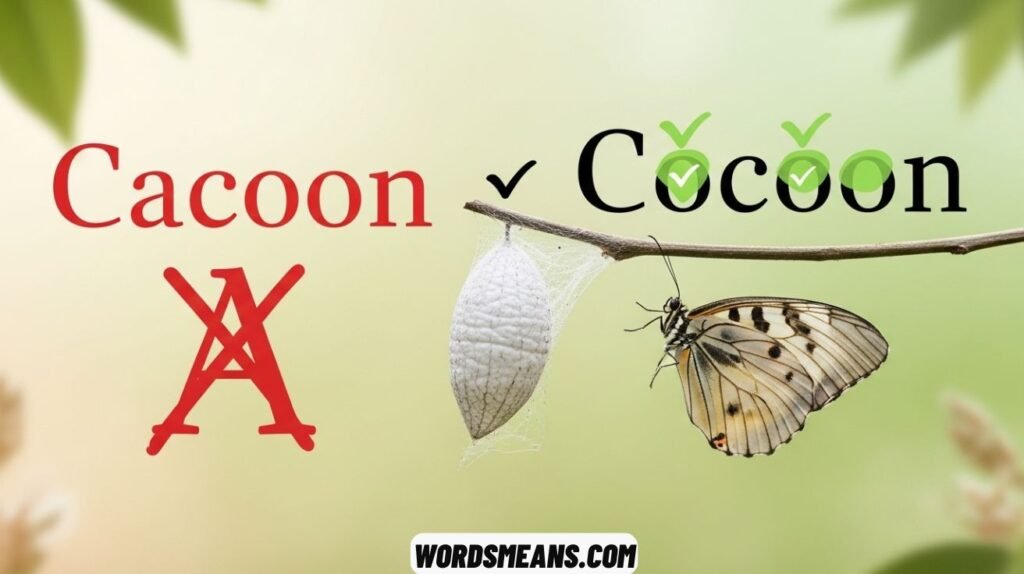
The confusion between cacoon and cocoon happens because they sound almost the same. When spoken aloud, the “ca” in cacoon and the “co” in cocoon are easy to mix up. English is full of words that sound similar but are spelled differently, such as “complement vs compliment,” “sweety vs sweetie,” and even “color vs colour.” This is why common spelling mistakes often appear in school papers, social media posts, and even articles written by professionals.
Many people assume that cacoon spelling is just another way to write cocoon, but that is not true. Cacoon meaning is completely different and refers specifically to a type of tropical bean found in certain regions. Meanwhile, cocoon meaning refers to a protective shelter created by insects during caterpillar transformation. Knowing the difference ensures clear writing and prevents misunderstandings.
What is a “Cacoon”?
A cacoon is not something you find in nature as a silk-covered insect casing. Instead, it is a special type of tropical bean that grows on the snuffbox bean plant, scientifically called Fevillea cordifolia. These beans are large, flat, and often have a hard shell. They are native to tropical regions like Africa and the West Indies and have been known for centuries.
The cacoon bean has many uses in local communities. People use these beans as decorations, jewelry, or even in traditional herbal uses. In botanical studies, scientists refer to cacoons when talking about the plant, but outside of this context, the word is rarely used. It is important to note that most people writing “cacoon” usually mean cocoon, so this confusion is common.
Interesting Fact: The word cacoon comes from Yoruba plant names, showing its cultural origin. These beans have been used in rituals, crafts, and even as small containers in the past.
What is a “Cocoon”?
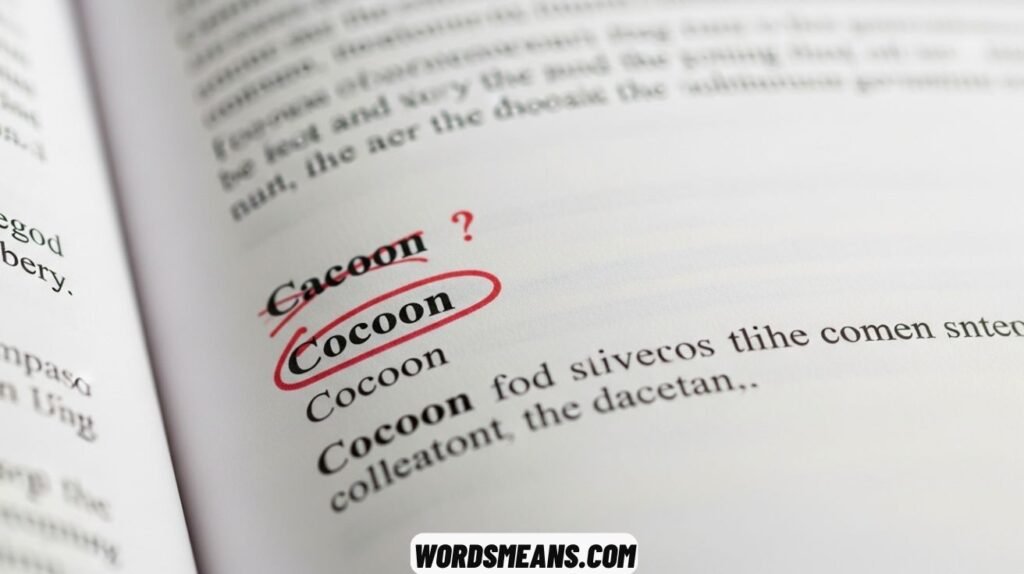
On the other hand, a cocoon is a fascinating nature protective structure. It is a silky casing spun by insects, such as silkworms and moths, to protect themselves during insect metamorphosis. A silkworm cocoon is perhaps the most famous example, producing silk that humans harvest for silk production.
A cocoon provides safety from predators and weather while the insect completes its insect life cycle. Caterpillars spin the silky casing, enclosing themselves until they emerge as butterflies or moths. Many people also use cocoon metaphorically, describing a safe or cozy space, such as when someone wraps themselves in blankets during cold weather or sits in cocoon chairs designed for comfort and protection.
Fun Fact: Interior designers often use cocoon chairs to give a sense of security and comfort. The term cocoon metaphor extends beyond insects, describing any protective or isolated environment in daily life.
“Cacoon” vs “Cocoon”: The Differences
To better understand the differences, here is a simple comparison table:
| Aspect | Cocoon | Cacoon |
| Correct Spelling | Cocoon | Cacoon |
| Commonality | Widely recognized and used | Rarely known or used |
| Definition | Protective shelter spun by insects during caterpillar transformation; also metaphorical cocoon or cocoon chairs | A tropical bean from Fevillea cordifolia |
| Context | Scientific, educational, and metaphorical contexts | Botanical context only |
| Typical Usage | Describing insect metamorphosis, comfort, or safety | Talking about the bean plant uses |
| Metaphorical Usage | Yes | No |
| Common Mistake | Often misspelled as “cacoon” | Mistaken for a misspelling of “cocoon” |
Spelling
The correct cocoon spelling is “cocoon,” with a “co” at the beginning. Dictionaries, science books, and educational materials all use this spelling. “Cacoon spelling” is only correct when referring to the tropical bean, but most people mistakenly write it when they mean cocoon.
Meaning
The word cocoon meaning is versatile. It refers to both the silky casing that insects use for protection and any space or situation that offers comfort and safety. In contrast, cacoon meaning is narrow, referring only to the tropical bean and its unique uses. Understanding this distinction is crucial to using the words properly.
Usage
People use cocoons frequently in nature books, articles, and everyday conversations. The word can describe actual insect shelters or metaphorical safe spaces. In the USA, it is common to see references to cocoon chairs, winter comfort, or even cocoon metaphor in self-help and lifestyle content.
On the other hand, cacoon appears rarely, mostly in botanical studies or discussions of tropical plant beans. Unless you are writing about Fevillea cordifolia or local uses of the bean, cacoon is unlikely to appear in general texts.
See Also : 210+ Good Roasts That Hurt Badly (Savage, Clever
Examples of “Cacoon” and “Cocoon” in Context
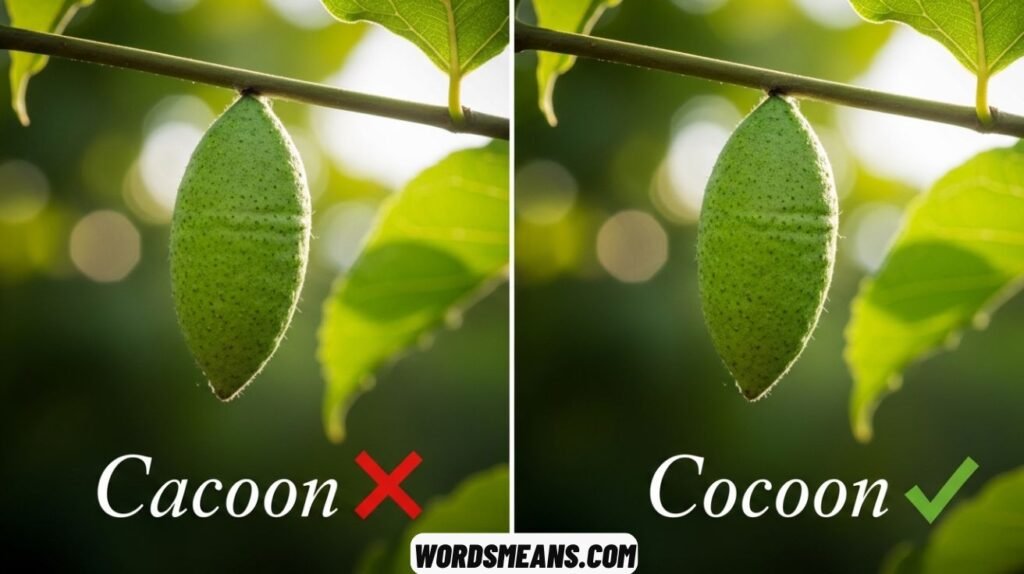
“Cacoon” in Context
In tropical regions, the cacoon bean plays a significant role in local culture. Artisans use the beans to make jewelry, carvings, and decorative items because they are durable and naturally beautiful. Traditional healers sometimes use cacoon beans in medicinal preparations, and botanical studies continue to explore their unique properties. The plant thrives in humid climates and provides resources for local economies, showing the practical importance of cacoon in its specific context.
Cocoon in Context
A cocoon serves as a life-saving structure for insects during caterpillar transformation. Silkworms spin silky casings that humans harvest for silk, while moths and beetles rely on cocoons to stay safe from predators. Beyond biology, cocoon metaphor is widely used in daily life. People may cocoon themselves at home for comfort, or designers may create cocoon chairs to replicate the feeling of safety and warmth. The word has grown to represent protection, transformation, and cozy isolation.
Origins of “Cacoon” and “Cocoon”
Origins of “Cacoon”
The word cacoon originates from tropical regions and is connected to Yoruba plant names. It entered English around 1797 to describe the large beans produced by Fevillea cordifolia. These beans became known through trade and botanical exploration, maintaining their unique name in scientific and cultural contexts. Local communities preserved the term through centuries of use, especially in craft, decoration, and traditional herbal uses.
Origins of “Cocoon”
The word cocoon has ancient roots in Latin and Greek. The Greek word “kokkos” and Latin “coccum” meant berry or seed, and it evolved into Old French as “coque” before entering English. By the 1690s, cocoon referred specifically to the silk-producing casings of insects. Over time, the word gained broader meanings, including metaphorical cocoon, describing protection, comfort, and isolation. By the 20th century, cocoon chairs and cozy personal spaces extended the word beyond nature into everyday life.
Understanding the Confusion Between Cacoon and Cocoon
Many people mix up cacoon spelling and cocoon spelling because they sound alike. This confusion is common in casual writing, social media, and even schoolwork. While one refers to a tropical bean, the other describes a protective shelter spun by insects during caterpillar transformation. Knowing the difference ensures clarity and avoids common spelling mistakes.
The confusion grows because English has many words that sound similar but differ in meaning. People may write cacoon when they intend cocoon. By understanding cacoon meaning and cocoon meaning, writers can improve both accuracy and readability, especially in educational and botanical context discussions.
What Makes a Cacoon Unique
A cacoon is a rare tropical bean that grows on Fevillea cordifolia, mainly in Africa and the West Indies. These beans are flat, large, and durable, often used in local crafts, jewelry, and even traditional herbal uses. The term is mostly known in botanical studies, making it uncommon in everyday conversation.
Local communities have valued cacoon beans for centuries. They are used in decorative art, medicinal practices, and small tools. Unlike cocoon, the cacoon bean does not relate to insects or silkworm cocoons. Knowing its origin and applications highlights why this spelling should not be confused with cocoon spelling.
Exploring the Cocoon in Nature
A cocoon is a protective shelter spun by insects like caterpillars and silkworms during insect metamorphosis. This silky casing keeps the insect safe from predators and environmental threats while it develops. The cocoon meaning also extends to metaphorical uses, describing safe, cozy spaces in everyday life.
Humans have used silkworm cocoons for centuries in silk production, creating fabric from the natural fibers. Beyond textiles, the word cocoon is applied to furniture like cocoon chairs, providing comfort and security. Understanding these uses helps distinguish cocoon from cacoon, which relates only to tropical plant beans.
See Also : White Heart Emoji Meaning and When to Use
The Role of Cocoon in Metaphors and Daily Life
The word cocoon is often used metaphorically to describe safety, comfort, and protection. People may cocoon themselves at home during cold weather, creating their own safe space. Designers use cocoon chairs to replicate the feeling of comfort and protection in living spaces.
Metaphorical uses of cocoon also appear in literature and self-help contexts. Writers compare personal growth or transformation to caterpillar transformation, emphasizing how individuals retreat to a protective shelter before emerging stronger. These uses make cocoon meaning broad and versatile compared to cacoon.
Comparing Cacoon and Cocoon Side by Side
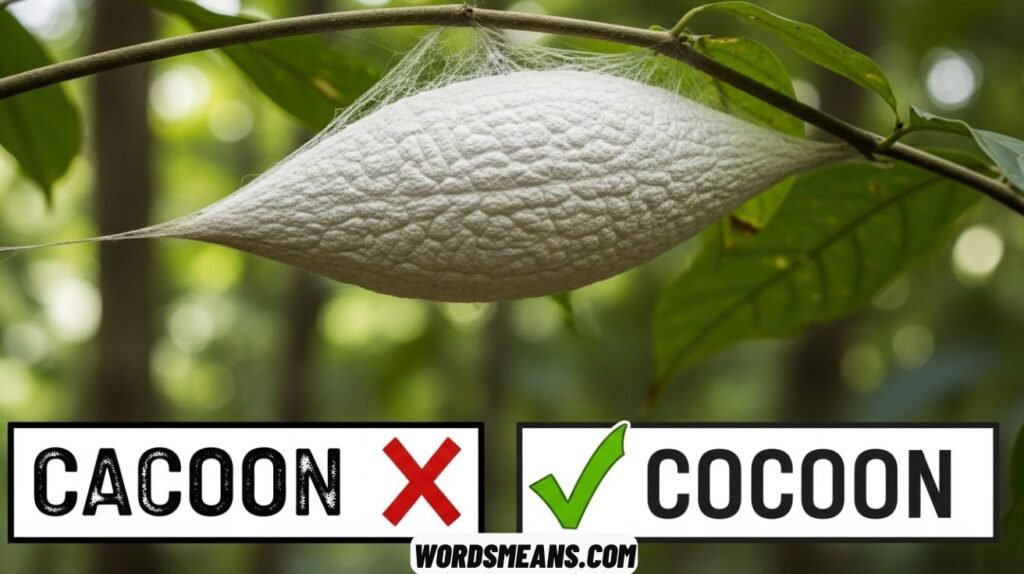
While cocoon describes a silky casing for insects, cacoon refers to a specific tropical bean. The spelling difference matters, as misusing the words can confuse readers. Cocoon spelling is recognized worldwide, while cacoon spelling is mostly used in botanical context and traditional discussions.
The words differ in meaning, usage, and metaphorical application. Cocoon can refer to furniture, home comfort, or safe space, while cacoon only refers to tropical plant beans like Fevillea cordifolia. Understanding this distinction ensures accurate communication in both science and everyday writing.
Origins of the Words Cacoon and Cocoon
The word cacoon comes from Yoruba plant names and entered English in the late 1700s. It refers specifically to the large beans of the snuffbox plant (Fevillea cordifolia) and has been used in botanical studies and traditional practices for centuries.
On the other hand, cocoon has Latin and Greek origins, with “kokkos” and “coccum” meaning berry or seed. Adopted into English in the 1690s, it initially described insect protective shelters. Over time, its metaphorical cocoon meaning emerged, showing the word’s evolution from nature to daily life.
Real-Life Examples of Cacoon Use
In tropical regions, artisans use cacoon beans to make jewelry, carvings, and decorative items. They are durable, naturally patterned, and valued in traditional herbal uses. Botanists studying the beans note their unique role in tropical plant beans ecology and cultural practices.
Cacoon is rarely referenced outside specialized contexts. Unlike cocoon, it does not describe insects, comfort, or safety. By exploring real-life uses of cacoon, readers can better appreciate the bean’s uniqueness and avoid confusing it with cocoon spelling.
See Also : 195+ Hilarious Roasts That Rhyme And Hurt
Real-Life Examples of Cocoon Use
A cocoon can be seen in nature when silkworms spin silky casings to protect themselves during insect metamorphosis. Beyond biology, people “cocoon” at home for comfort or use cocoon chairs to create a safe space. The word also describes personal growth, retreat, or protection in literature and daily conversation.
The flexibility of cocoon meaning makes it widely used. In contrast, cacoon is specific to tropical beans. By comparing examples, it becomes clear that cocoon applies both literally and metaphorically, whereas cacoon remains strictly botanical.
FAQs
What is the meaning of Cacoon?
A cacoon is a tropical bean from the snuffbox plant (Fevillea cordifolia) used in crafts and traditional practices.
What exactly is a Cacoon?
It is a large, flat tropical bean distinct from the insect cocoon, mainly found in Africa and the West Indies.
How do you spell butterfly cocoon?
It is spelled cocoon, with a “co” at the beginning.
How do we spell cocoon?
The correct spelling is cocoon, referring to an insect’s protective shelter or metaphorical safe space.
Conclusion
Understanding Cacoon or Cocoon helps us use the right word every time. A cocoon is a protective shelter made by insects like caterpillars and silkworms. It keeps them safe while they change into butterflies or moths. People also use cocoon to describe a safe and cozy space at home. Cacoon is different. It is a tropical bean from the plant Fevillea cordifolia. Knowing these differences makes writing clear and correct.
Many people make mistakes when spelling Cacoon or Cocoon. Using the correct word shows knowledge and care. Cocoon can describe insects, silky casings, or cocoon chairs for comfort. Cacoon only refers to the bean in botanical studies. Learning these words helps everyone read and understand better. Correct spelling keeps ideas accurate and easy to follow.