Upside Down Emoji Meaning and Uses: Understanding 🙃 Emoji Meaning in Digital Communication
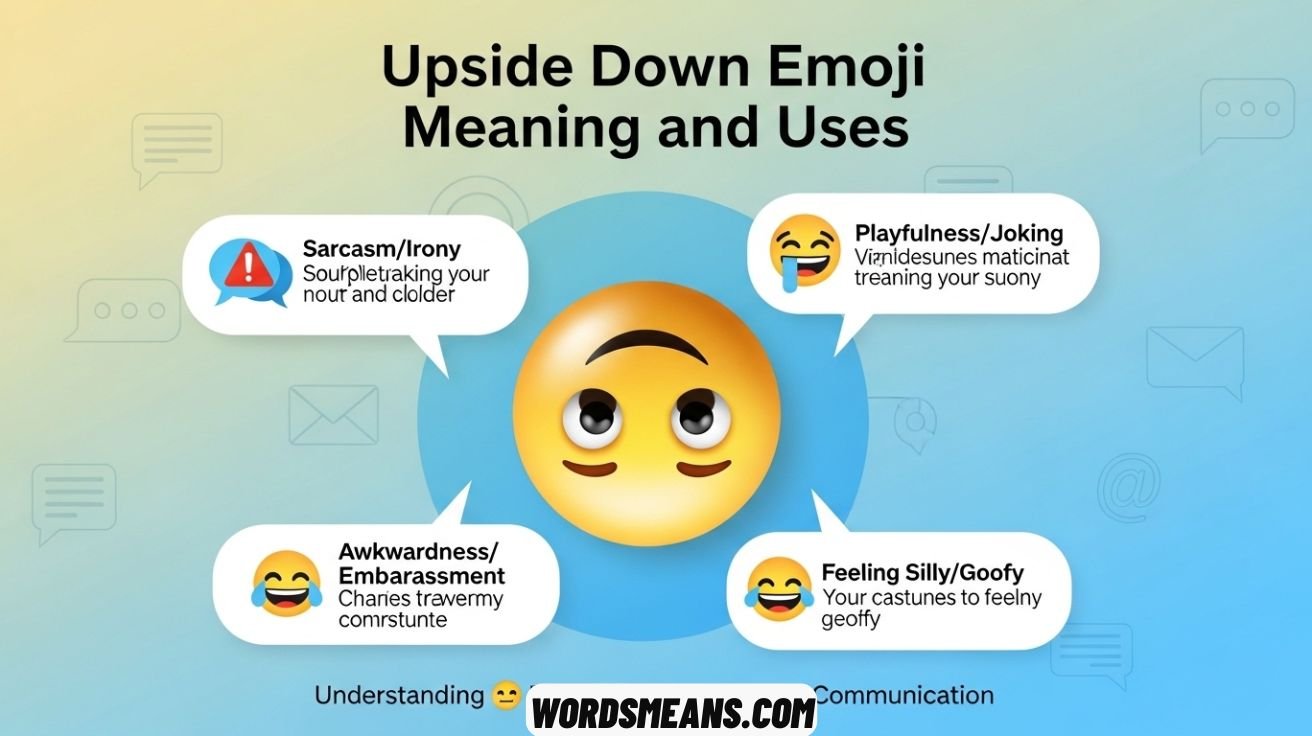
Upside Down Emoji Meaning explains what the 🙃 emoji shows in a text. It often shows sarcasm, irony, or playful frustration. People use it to add tone and hidden emotion to simple messages.
Have you ever received 🙃 and felt confused? The words looked normal, but the emoji changed the feeling. One small symbol can completely change the message tone.
The Upside Down Emoji Meaning is popular in digital communication today. It helps people express humor without long explanations. When used correctly, it makes texting clearer and more expressive.
What Is the Upside Down Emoji?
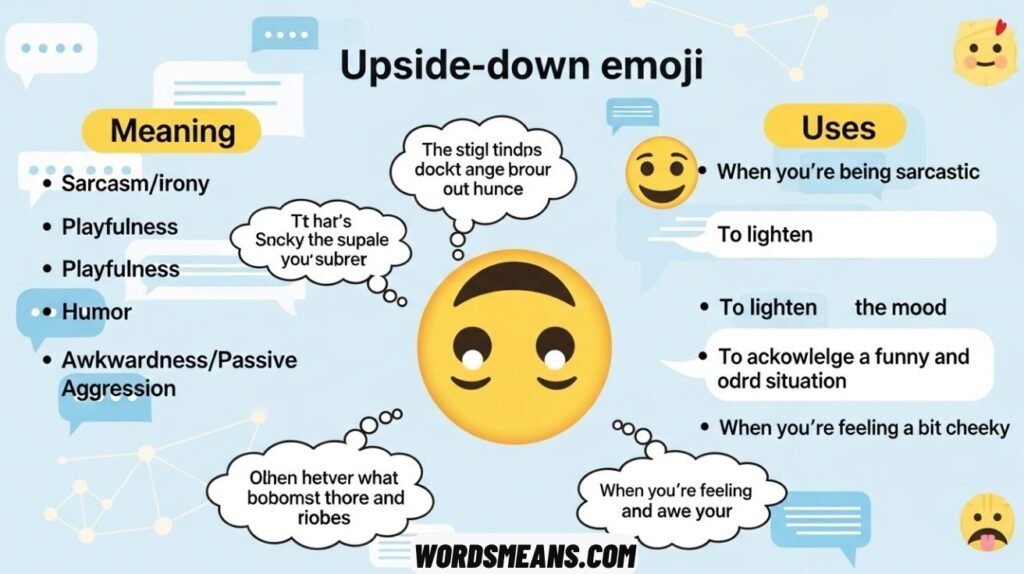
The upside-down emoji, officially called the “Upside-Down Face,” shows a simple smile turned upside down. While it looks silly at first glance, it is a powerful tool in emoji interpretation. Unlike a standard smile or frown, this emoji does not have a fixed emotional meaning. Its flexibility allows it to communicate a variety of moods depending on the context.
In online messaging context, the 🙃 emoji often conveys irony, mild annoyance, or playful frustration. For example, if a friend texts you that they got stuck in traffic again, replying with 🙃 can signal that you understand the situation but are also teasingly frustrated. The upside-down emoji is especially popular in American texting culture, where tone can be hard to interpret without digital body language cues.
Unicode and Official Meaning
The 🙃 emoji was added to the Unicode Standard 8.0 in 2015 as one of the Unicode emojis designed to capture subtle emotional nuances. According to Emojipedia, the upside-down emoji meaning officially includes silliness, sarcasm, irony, passive-aggressive emoji behavior, or frustration disguised as a smile. Jennifer Daniel, Chair of the Unicode Emoji Subcommittee, describes it as “the emoji equivalent of saying something with a smile that clearly isn’t meant to be taken at face value.”
Unicode defines emojis like 🙃 not just as decorative symbols, but as tools for emotional expression online. They allow people to convey complex feelings in a text-based medium, serving as visual tone markers that replace some elements of face-to-face communication.
A Linguist’s Take: Emojis Are Emotional Context Tools
Linguists view emojis as more than fun images—they are texting shorthand that provides emotional context. Dr. Gretchen McCulloch, author of Because Internet, explains that emojis act as nonverbal cues in digital communication, mimicking facial expressions and tone of voice that text alone cannot convey.
The 🙃 emoji, in particular, is often used as a subtle text sarcasm indicator. It is the digital equivalent of a sarcastic remark delivered with a smirk or a small eye-roll. In essence, it is part of emoji linguistics, helping users convey irony, humor, or mild annoyance in ways that words alone cannot. It also functions as an expressive icon in social media captions, Instagram emojis, and Snapchat reactions, adding nuance to online conversations.
My Take
Personally, I find the 🙃 emoji incredibly versatile. It is my go-to symbol for expressing playful frustration without sounding harsh. For instance, texting, “Of course, the Wi-Fi dies right before my submission deadline 🙃” communicates annoyance while keeping the tone light.
The upside-down emoji works best when the audience is familiar with your sense of humor. Using it with friends or close colleagues allows you to soften complaints or tease lightly. In contrast, using it with people who do not understand your tone can backfire, leading to miscommunication. This highlights how emojis function as informal communication symbols and messaging tone enhancers.
How Do People Use the Upside Down Emoji?
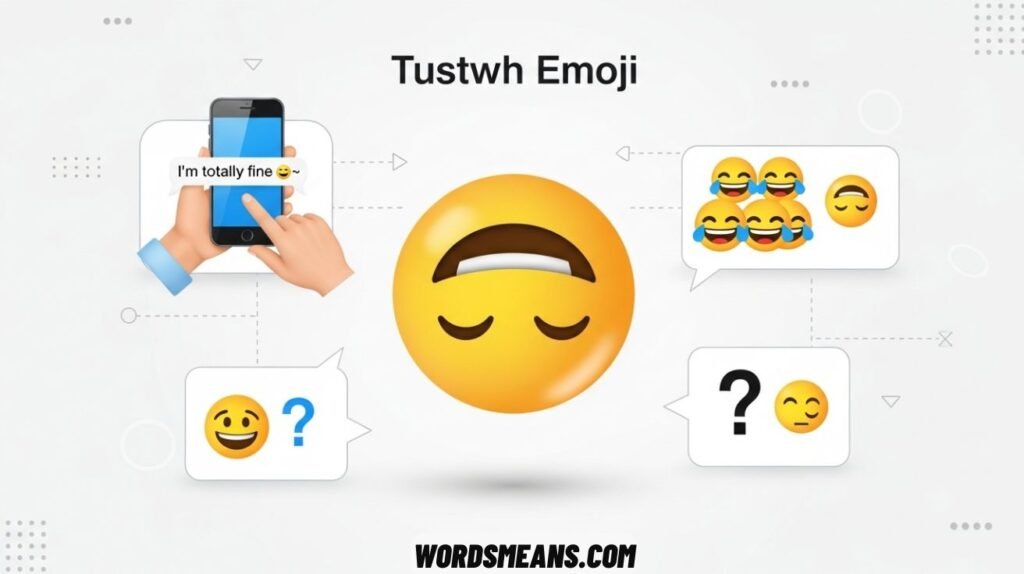
The 🙃 emoji is incredibly flexible and its meaning changes depending on the situation. In online messaging context, it can indicate sarcasm, frustration, self-mockery, ironic communication, or even subtle flirting. Understanding these uses is key to mastering its emoji interpretation.
1. Sarcasm and Irony
One of the most common uses of 🙃 is for sarcasm and irony. For example, texting, “Oh sure, I love waiting an hour in line for coffee 🙃,” conveys frustration humorously. In this case, the emoji serves as a text sarcasm indicator that makes the ironic tone clear.
2. Playful Frustration or Helplessness
The upside-down face is also a favorite for expressing playful frustration. It allows you to complain without sounding harsh. For instance, “Lost my keys again. That’s the third time this week 🙃” communicates annoyance while keeping the tone light and relatable.
3. Self-Deprecation
People often use 🙃 to poke fun at themselves. It’s a form of emoji-rich messages where the sender acknowledges a small mistake humorously. An example could be texting, “Told my boss ‘love you’ instead of ‘bye’ at the end of the call 🙃.” This creates relatability and softens the embarrassment.
4. Mock Politeness or Passive-Aggression
In some contexts, the 🙃 emoji acts as a passive-aggressive emoji, allowing subtle expression of displeasure while maintaining politeness. For example, “Oh, you ignored my message for three days but liked my post? Cool 🙃.” It softens the critique but still communicates annoyance.
5. Flirting or Inside Jokes
Finally, the upside-down emoji can be playful or flirty in conversations among friends or partners. It is often paired with teasing remarks or inside jokes. A text like, “So you’re bringing snacks and wine? You’re perfect 🙃,” conveys humor and warmth.
See Also : 90+ Roasts to Say to Your Sister (Funny, Savage & Playful Comebacks)
When Not to Use the Upside Down Emoji
Although the 🙃 emoji is versatile, context matters. Using it in the wrong situation can cause confusion or offense. In formal conversations, such as workplace emails or academic messages, it can appear unprofessional. For serious situations, like offering condolences, it can seem dismissive.
Formal Conversations
Avoid using the upside-down face in professional or unfamiliar settings. In these contexts, digital body language like emojis may be misinterpreted. Texts intended to convey sincerity can appear flippant if paired with 🙃.
Serious Situations
Using the 🙃 emoji in serious conversations can send the wrong message. For example, writing, “I’m sorry to hear about your loss 🙃” is inappropriate. In emotionally charged exchanges, the absence of an emoji is often better, as your presence and words carry the emotional expression online more effectively.
Emoji Evolution: A Glimpse at Usage Stats
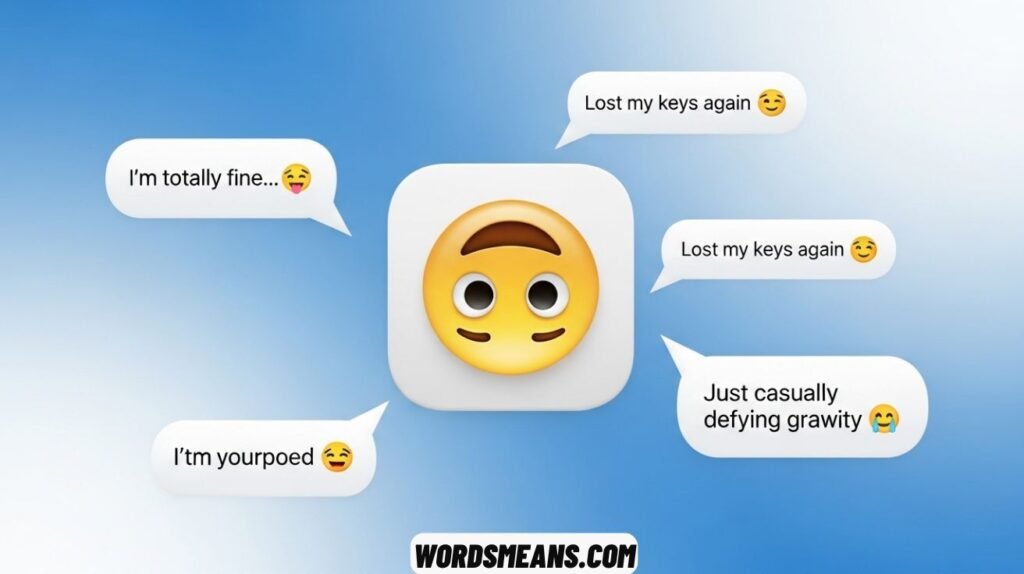
Emojis have evolved rapidly in American texting culture. According to a 2023 Adobe survey, 67% of Gen Z respondents reported using emojis to convey feelings more effectively than words. The upside-down face ranked highly for expressing irony, humor, and emotional complexity.
During the pandemic, emoji usage statistics show a spike in the use of 🙃, as people sought to maintain informal communication symbols and texting cues in their conversations. Emoticons and Unicode emojis like 🙃 have become essential tools for expressing subtle tones and enhancing messaging tone in online slang and texting shorthand.
Below is a simple table showing common 🙃 emoji uses with examples:
| Use | Example | Meaning |
| Sarcasm/Irony | “Oh great, another Monday 🙃” | Sarcastic tone |
| Playful Frustration | “Lost my keys again 🙃” | Mild annoyance |
| Self-Deprecation | “Called my teacher ‘mom’ 🙃” | Humorous mistake |
| Passive-Aggression | “You ignored my text? Cool 🙃” | Subtle displeasure |
| Flirting/Inside Joke | “Snacks and wine tonight? 🙃” | Playful teasing |
Understanding the Upside-Down Emoji in Everyday Texts
The upside-down emoji 🙃 is more than a funny face. In digital communication, it conveys irony, mild annoyance, or playful sarcasm. People often use it in casual texts to add subtle emotion that words alone cannot express. Its flexibility makes it a popular tool for emoji interpretation, especially when tone is hard to judge.
In American texting culture, the 🙃 emoji can soften complaints or jokes. For example, a message like “Lost my keys again 🙃” communicates frustration lightly. Its role as a texting cue or informal communication symbol allows users to express nuanced emotions, creating clarity in messages that might otherwise seem blunt or confusing.
See Also : Soda Tab Meaning, Origin and Usage
How Sarcasm and Irony Come Alive with 🙃
Sarcasm is hard to convey in text because tone is missing. The 🙃 emoji solves this by acting as a visual tone marker, letting readers know that a statement is meant ironically. A message like “Oh sure, I love standing in line for hours 🙃” clearly shows ironic communication without needing extra explanation.
Similarly, the emoji enhances text sarcasm indicators in digital conversations. It adds personality and nuance to online messaging context, helping users avoid misunderstandings. By pairing it with words, the upside-down face signals humor or critique playfully, maintaining a balance between jest and subtle commentary.
Expressing Playful Frustration with the Upside-Down Emoji
Many people use 🙃 to express playful frustration. For example, when something goes wrong but isn’t catastrophic, adding this emoji communicates annoyance in a lighthearted way. It transforms complaints into emoji-rich messages, making the tone clear without sounding harsh or negative.
This usage highlights the emoji’s role as an informal communication symbol. Texts like “The Wi-Fi died again 🙃” let friends know you are frustrated but joking. Its subtlety also enhances messaging tone, giving a digital version of an eye-roll that is relatable in casual American texting culture.
Using 🙃 for Self-Deprecation and Humor
The upside-down emoji is excellent for self-deprecating humor. It allows users to acknowledge small mistakes or embarrassing moments lightly. A text like “Told my boss ‘love you’ instead of ‘bye’ 🙃” signals humility and adds emotional expression online.
It also strengthens emoji interpretation by showing others that the message is playful. Self-deprecation using 🙃 can make conversations relatable, fostering connection. In digital communication, it is an effective tool for balancing humor and honesty without overstating your tone or intention.
When 🙃 Signals Passive-Aggression
Sometimes, the upside-down face acts as a passive-aggressive emoji. It can indicate mild annoyance or mock politeness without direct confrontation. A text like “You ignored my message but liked my post? 🙃” conveys displeasure subtly and humorously.
This subtle use reflects the emoji’s role as a nonverbal cue in texting shorthand. By pairing it with casual messages, users maintain social grace while expressing critique. It is a versatile informal communication symbol in both friendships and casual social interactions online.
Flirting and Inside Jokes with 🙃
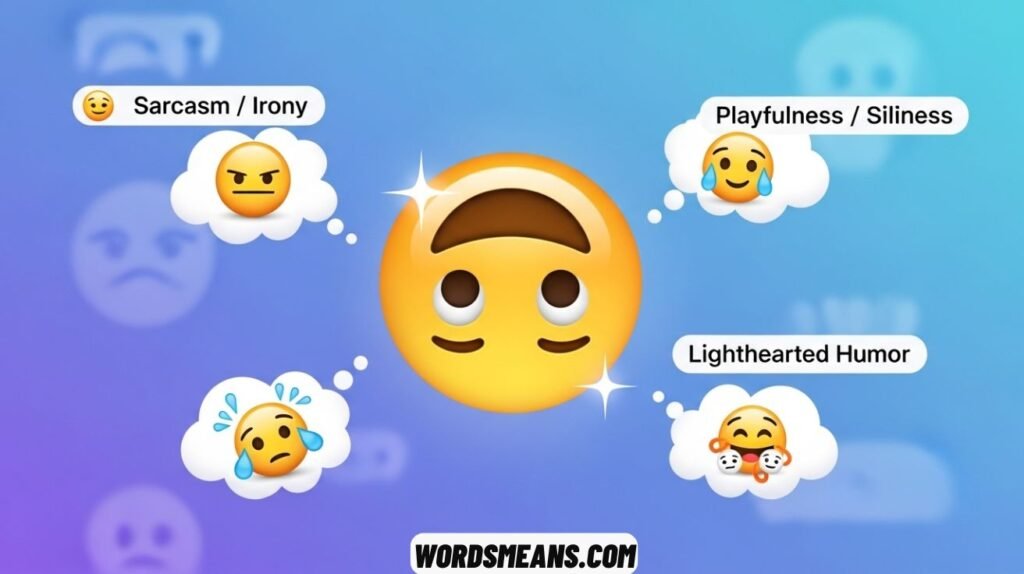
The upside-down emoji is also used in playful or flirty texts. In conversations among close friends or partners, it signals teasing, humor, or inside jokes. A text like “Snacks and wine tonight? 🙃” communicates warmth and playfulness effectively.
In online messaging context, the emoji adds depth to humor and flirtation. It functions as a visual tone marker, helping readers interpret the playful intent behind the words. It is a popular Instagram emoji and Snapchat reaction for casual, friendly exchanges.
See Also : 45 How to Say Light Food Will Be Served – Polite, Professional, and Creative Wording Ideas
Reading the Room: When Not to Use 🙃
The upside-down emoji is not suitable for formal or serious communication. In professional emails or academic settings, using 🙃 can appear unprofessional or flippant. Texts intended to convey sincerity may be misread if paired with this emoji.
Similarly, in emotionally sensitive conversations, it can come across as dismissive. Avoid it when offering condolences or serious support. Using it in the wrong context can harm clarity, as emoji linguistics shows that tone markers are effective only when paired with appropriate text message tone.
Emoji Trends and Usage in American Culture
The upside-down emoji has grown in popularity over the years, especially among Gen Z and Millennials. According to emoji usage statistics, many users rely on it to convey irony, humor, or playful frustration. It has become a staple in digital body language and casual texting shorthand.
During high-stress times like the pandemic, usage spiked, reflecting a need for emotional expression online in lighthearted ways. From social media captions to Snapchat reactions, the 🙃 emoji serves as a versatile expressive icon that communicates tone, intention, and humor effectively in American texting culture.
FAQs
What does 🙃 mean when texting?
🙃 usually shows sarcasm, irony, or playful frustration in a message.
It tells the reader not to take the words too seriously.
Why is 🙃 used?
People use 🙃 to add clear tone and emotion to a text.
It helps express humor, teasing, or light annoyance.
Is 🥰 a flirty emoji?
Yes, 🥰 is often a flirty and affectionate emoji.
It shows love, admiration, or sweet feelings for someone.
What does it mean when a girl says 🙃?
It usually means she is being playful, sarcastic, or gently annoyed.
The exact meaning depends on the conversation and context.
Conclusion
The Upside Down Emoji Meaning shows how one small symbol can carry many feelings in digital messages. People use 🙃 to share sarcasm, light humor, playful frustration, or gentle teasing. This emoji helps readers understand the real text message tone. It adds emotion where plain words may sound flat or confusing. In modern digital communication, clear tone matters a lot. The upside-down face works as a simple sign that says, “I am joking” or “I feel slightly annoyed but still calm.” When used with care, it improves emotional expression online and keeps conversations friendly and clear.
Understanding the Upside Down Emoji Meaning helps you become better at online communication. You can use it to show irony and humor without sounding rude. You can also avoid it in serious or formal situations. This smart choice shows maturity and respect. Emojis act as helpful tools in daily texting. They support clear messaging tone and reduce misunderstanding. When you learn their meanings, you build stronger digital skills. The upside-down emoji may look simple, but it plays an important role in modern conversations across social media and text messages.