ATV vs. Side-by-Side: Which Powersports Machine Fits Your Riding Style?
Most people walk into a powersports dealership already half-convinced they know what they want. Then they see a side-by-side sitting next to a sleek ATV and a row of jet skis, and suddenly the choice gets a lot harder. The honest answer is that there’s no universally “better” machine — only the one that matches how you actually ride, who rides with you, and what terrain you’re dealing with.
This is a breakdown of all three vehicle types, built around real differences that actually matter at the point of purchase. By the end, you’ll have a clear framework for deciding — not just a list of features to nod at.
The Case for the Classic ATV
The ATV is still the purest expression of off-road riding. You’re on top of it, not inside it. Your body steers as much as your hands do, and that physical connection to the terrain is something side-by-sides just can’t replicate. For a solo rider who wants maximum agility on tight trails, steep hillsides, or sandy flats, an ATV remains the right call.
Price is another real advantage. Entry-level ATVs from manufacturers like CFMOTO and Yamaha start considerably lower than their side-by-side counterparts, which makes the category accessible for first-time buyers or riders who want a second machine without spending aggressively. Parts availability is strong, maintenance is straightforward, and the learning curve for someone with zero off-road experience is gentler than with a UTV.
The trade-off? You ride alone. Cargo capacity is limited to whatever fits in a small rear rack. And if you’re covering long stretches of rough terrain, your body absorbs every rut directly. That’s thrilling for twenty minutes, tiring for two hours.
According to the U.S. Bureau of Economic Analysis’s 2024 outdoor recreation data released in March 2026, motorcycling and ATVing generated $11.4 billion in value added as an activity category , placing it fourth among all outdoor recreation activities nationally — a clear signal that the ATV is far from a fringe pursuit. The BEA’s full 2024 outdoor recreation statistics release breaks down how deeply embedded off-road riding is in the American economy.
Why Side-by-Sides Have Changed the Game
The shift in the market over the last decade is real. By vehicle type, UTVs hold a 69.7% share of the ATV and UTV market, reflecting a broader industry shift toward side-by-side vehicles, which offer more utility, greater passenger capacity, and a more stable platform for both work and recreation.
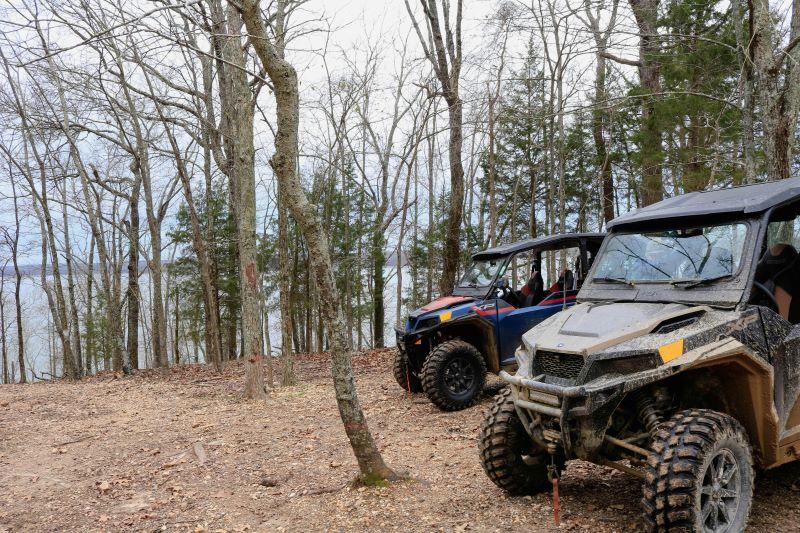
That dominance makes sense when you look at how people actually use these machines. A side-by-side lets you bring a passenger, haul coolers, tow small trailers, and run cargo across a property — all in the same Saturday. Families especially gravitate toward them because everyone comes along for the ride. And modern sport-trim models from brands like CFMOTO, Yamaha, and Polaris have closed most of the performance gap with traditional ATVs, offering suspension travel and power outputs that hold up on serious terrain.
The catch is size and cost. A full-size side-by-side is harder to trailer, needs a wider trail, and carries a higher sticker price. If your riding is primarily tight single-track in the woods, a UTV can feel like parallel parking a pickup truck on a hiking path.
“The accessibility and versatility of modern ATVs and UTVs make them suitable for a wide range of users, from beginners to experienced off-roaders,” according to NextMSC’s ATV and UTV Market analysis. That versatility is the core reason side-by-sides have become the default choice for buyers who want one machine to handle everything.
Don’t Overlook the Watercraft Option — Especially in Florida
Here’s something the ATV-versus-side-by-side debate almost always ignores: if you live near water, a personal watercraft might be the smarter buy altogether. Florida riders in particular have access to hundreds of miles of coastline, rivers, and inland waterways that an ATV simply can’t touch.
According to the National Marine Manufacturers Association’s 2025 Personal Watercraft Sales Trends report, U.S. PWC sales totaled 63,643 units in 2025 at an average retail price of just over $16,000, with growth driven largely by consumer preference for premium three-passenger models, which accounted for 89% of total unit sales. That average price puts a quality three-seat PWC right in the same conversation as a mid-tier side-by-side. You can read the full NMMA Personal Watercraft Sales Trends report for regional demand patterns and pricing detail.
The Space Coast region of Florida is tailor-made for water-based riding. The Indian River Lagoon, the Atlantic coastline just east of Titusville, and easy access to Mosquito Lagoon give watercraft owners a natural playground that doesn’t require a truck and trailer every time they want to ride. Shops like RIVA Motorsports in Space Coast in Titusville carry Yamaha watercraft alongside their full ATV and side-by-side lineup, which makes it genuinely possible to compare all three categories under one roof before you commit.
Florida ranks second in the nation for total value added from outdoor recreation, according to the U.S. Bureau of Economic Analysis, at $58 billion — roughly 3.6% of the state’s GDP , per a 2024 report from Axios Tampa Bay citing BEA data. The demand for powersports in a state this outdoor-focused isn’t going to slow down.
The RIDE Framework: Four Questions That Make the Decision Easier
Rather than stacking spec sheets, run through what I call the RIDE Framework before you buy. It’s four questions that cut through the noise.
- Riders. How many people come with you on a typical outing? If the answer is usually one, an ATV is your machine. If it’s two or more, a side-by-side or three-passenger PWC changes the math entirely.
- Intent. Are you riding for pure sport, or do you need utility on top of it? Work chores, property management, and cargo hauling all push you toward a UTV. Pure adrenaline and trail agility push you back toward an ATV or a fast PWC.
- Destination. What terrain dominates your riding? Tight wooded trails favor ATVs. Open dunes, farm land, and family campgrounds favor side-by-sides. Coastal waterways and lakes make a strong argument for a personal watercraft.
- Economy. What’s your honest all-in budget, including storage, trailer, gear, and maintenance? ATVs are usually the cheapest to buy and maintain. Side-by-sides cost more upfront but spread across more riders per trip. PWCs have lower trailer and storage demands in marina-friendly regions.
Run those four answers against each other and a clear winner usually emerges. If it doesn’t, that’s actually useful information — it means you’re a strong candidate for a dealer demo day where you test-ride across categories back to back.
A Quick Comparison at a Glance
| Category | ATV | Side-by-Side (UTV) | Personal Watercraft
|
|---|---|---|---|
| Passenger capacity | 1 rider | 2 to 6 (model dependent) | 1 to 3 |
| Terrain | Tight trails, dunes, mud | Open terrain, farm, dunes | Waterways, coast, lakes |
| Cargo/utility | Minimal (rear rack) | High (bed, tow rating) | Very limited |
| Entry price range | Lower | Mid to high | Mid (avg. $16K per NMMA, 2025) |
| Best fit | Solo sport riders | Families, utility users | Coastal and water riders |
The Right Machine Is the One You’ll Actually Use
The worst powersports purchase is an impressive machine that sits in the garage because it doesn’t fit your real life. A nimble ATV that gets ridden every weekend beats a fully loaded side-by-side that only comes out twice a year. Think through your terrain, your typical crew, and your storage situation before you fall in love with specs.
Test rides exist for exactly this reason. If you’re in central Florida and you’ve been going back and forth on this decision, the smartest move is putting all three options under you before committing to one. That hands-on comparison will resolve questions no spec sheet ever will.