
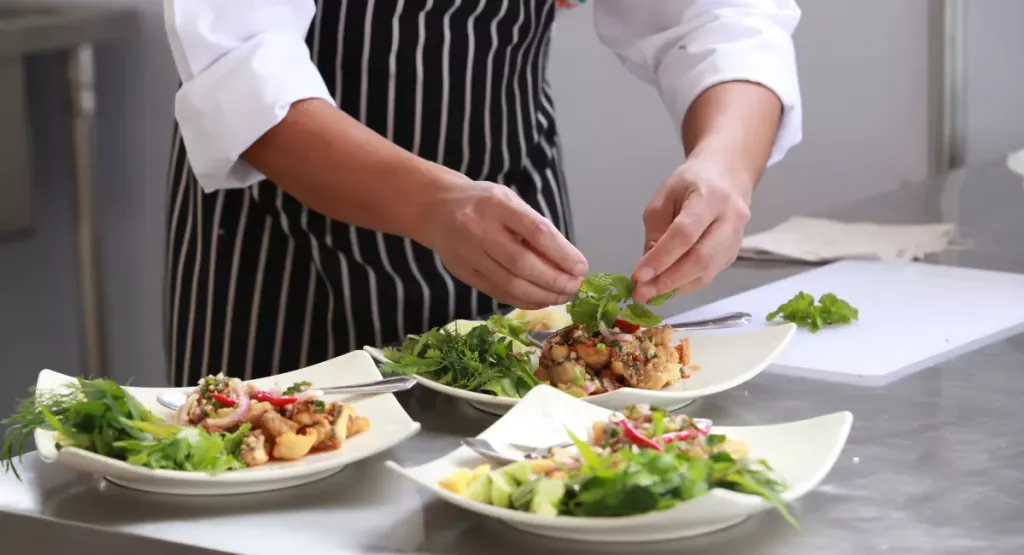
How to Source Ingredients Like a Private Chef
Most home cooks blame themselves when a dish falls flat. The sauce was too thin, the protein came out dry, the whole thing tasted somehow smaller than the recipe promised. The technique gets reviewed, the timing second-guessed. But private chefs point to something else first: the ingredient.
Sourcing is the skill that restaurants charge you for without naming it on the menu. A grilled piece of fish at a chef-driven spot tastes different not because the cook has a faster flame, but because that fish was swimming 36 hours ago and arrived whole to a kitchen with a relationship with the supplier. You can close that gap at home, but only if you change where and how you shop.
The Ingredient Problem Nobody Talks About
Grocery shopping is treated as a chore to finish fast. You work from a list, you move through aisles in a fixed pattern, and you grab whatever is on the shelf at eye level. That habit is actively working against your cooking.
The difference between a supermarket tomato and a dry-farmed one is not subtle. It is the difference between water and flavor. The same gap exists in eggs, olive oil, aged cheese, butter, and fresh herbs. None of these require culinary training to appreciate. They just require knowing that the gap exists and deciding it matters.
Professional sourcing is built on a simple conviction: technique amplifies ingredient quality, it does not replace it. A private chef cooking for a high-profile client in Bel-Air is not relying on superior skill to rescue a mediocre protein. They start with the best they can find and then apply skill on top of that.
The Food Institute reported in 2024 that the Specialty Food Association found sales of specialty food products grew from $88 billion in 2013 to an estimated $207 billion in 2023, a 149% increase. That number reflects consumers voting with their wallets for the thing private chefs have always known: quality ingredients are not a luxury category, they are the foundation of the whole operation.
What Private Chefs Actually Look For
Private chefs do not shop with a mindset of “where is the cheapest version of this item.” They shop with four questions, and you can apply the same ones on your next grocery run. I call this the PQFT framework: Provenance, Quality indicators, Freshness signals, and Texture.
Provenance means knowing where something came from. State-of-origin labeling on meat and produce is a starting clue, not an answer. “Product of California” covers 100,000 acres of difference. Push further. Look for a named farm, a specific region, a harvest date. When a product has a specific origin story, the producer is confident enough to put it on the label.
Quality indicators are category-specific. For olive oil: look for a harvest date within 18 months, a named olive variety, and a place of origin, not just “packed in Italy.” For cheese: rinds should be intact, no ammonia smell. For fresh fish: clear eyes if whole, no pooling liquid in the package, and a smell that reads like the ocean rather than something approaching the ocean post-mortem.
Freshness signals are easy to read once you look. Greens should be crisp, not limp. Stone fruit should yield slightly to a gentle squeeze. Bread should feel heavy for its size. Herbs should snap, not bend. You learn these faster than you think when you start paying attention.
Texture as a buying cue is underused. Chickpeas from a high-turnover bin will cook evenly and hold structure. Old dried beans take forever and still crumble. A well-marbled short rib looks different from a lean one before it ever hits heat.
“Flavor is locked in before the chef touches anything. Our job is not to create it from scratch but to protect what’s already there.” This reflects a consensus position among private household chefs, summarized in chef training programs focused on ingredient-first cooking methodology.
Where You Shop Determines What You Can Cook
This is the part most cooking advice skips. You cannot source like a private chef if your options are limited to a single large chain where produce sits in a mist rack for a week before you see it. The store matters as much as the list.
The ideal sourcing strategy uses three channels: a high-quality everyday grocery for staples and proteins, a specialty or gourmet market for cheeses, prepared components, and imported pantry items, and a direct farm source for peak-season produce when you can get it.
For anyone cooking in or around Los Angeles, Gelsons Gourmet Food Market in West Hollywood fits squarely in that second channel. The location carries fresh sushi made daily, a full-service deli with a catering specialist, an in-store bakery, and an extensive selection of kosher and natural products. That range of prepared and specialty items is exactly what private chefs rely on when building a meal that has multiple components without requiring five hours of active kitchen time.
California’s agricultural supply chain makes high-quality sourcing more accessible here than almost anywhere else in the country. The USDA Economic Research Service reported in 2022 that California accounts for 37.7% of direct farm food sales nationally, with the state’s concentration along the West Coast driving unusually strong availability of locally sourced produce and proteins. That geographic advantage flows directly into what your specialty grocer can put on the shelf.
A Practical Sourcing Checklist You Can Use This Week
Private chefs do not reinvent this process every time. They build habits that make better sourcing automatic. Here is a five-point checklist to run through before you finalize your shopping plan:
- Anchor the meal to the best protein you can find, not the one on sale. Build the rest of the meal around it rather than buying everything first and fitting protein in last.
- Check the harvest or pack date on anything in a bottle or jar. Olive oil, nuts, vinegar, and dried pasta all degrade and most people never look.
- Buy one specialty cheese instead of a pile of generic ones. A single well-chosen piece of aged Manchego or raw-milk Camembert does more for a cheese board or a pasta than three blocks of supermarket cheddar.
- Use the deli counter. Prepared components like braised vegetables, charcuterie, or marinated proteins cut your active cooking time significantly and are often sourced better than raw equivalents in the same store.
- Ask one question per visit. “Where does this fish come from?” or “How long have these been in?” The answer tells you whether the store can support your sourcing goals at all.
| Ingredient Category | What to Look For | Red Flag
|
|---|---|---|
| Olive Oil | Harvest date within 18 months, named region | No date, “blend of EU oils” |
| Fresh Fish | Clear eyes, no pooling liquid, ocean smell | Milky liquid in pack, sharp ammonia smell |
| Hard Cheese | Intact rind, no weeping at cut edge | Dried-out rind, sour smell at room temp |
| Fresh Herbs | Firm stems, bright color, snaps cleanly | Yellowing leaves, wilted stems, slimy base |
| Stone Fruit | Slight give under pressure, fragrant at stem | Mealy texture, no scent at all |
| Dried Legumes | Current crop year, uniform color and size | Dusty, faded, mixed sizes in the same bin |
The California Advantage Is Real, But You Have to Use It
Living in Southern California puts you at a genuine sourcing advantage. The climate produces year-round fresh produce, the coastline supports direct fish sourcing, and the density of specialty retailers means you have options that most American cities simply do not. California’s Department of Food and Agriculture reports that the state’s agricultural exports totaled $23.8 billion in 2024, making it the country’s dominant agricultural producer. That production strength is what fills the shelves at every quality grocer and specialty market in the region.
But the advantage only matters if you show up to the right stores with the right questions. The private chef mindset is not about spending more money on every single item. It is about spending deliberately, identifying the two or three ingredients in any given meal that will define it, and sourcing those with real intention while treating everything else as a supporting cast.
Change where you shop for the key ingredients and your cooking changes with it. That is the whole framework. The technique can stay exactly the same.