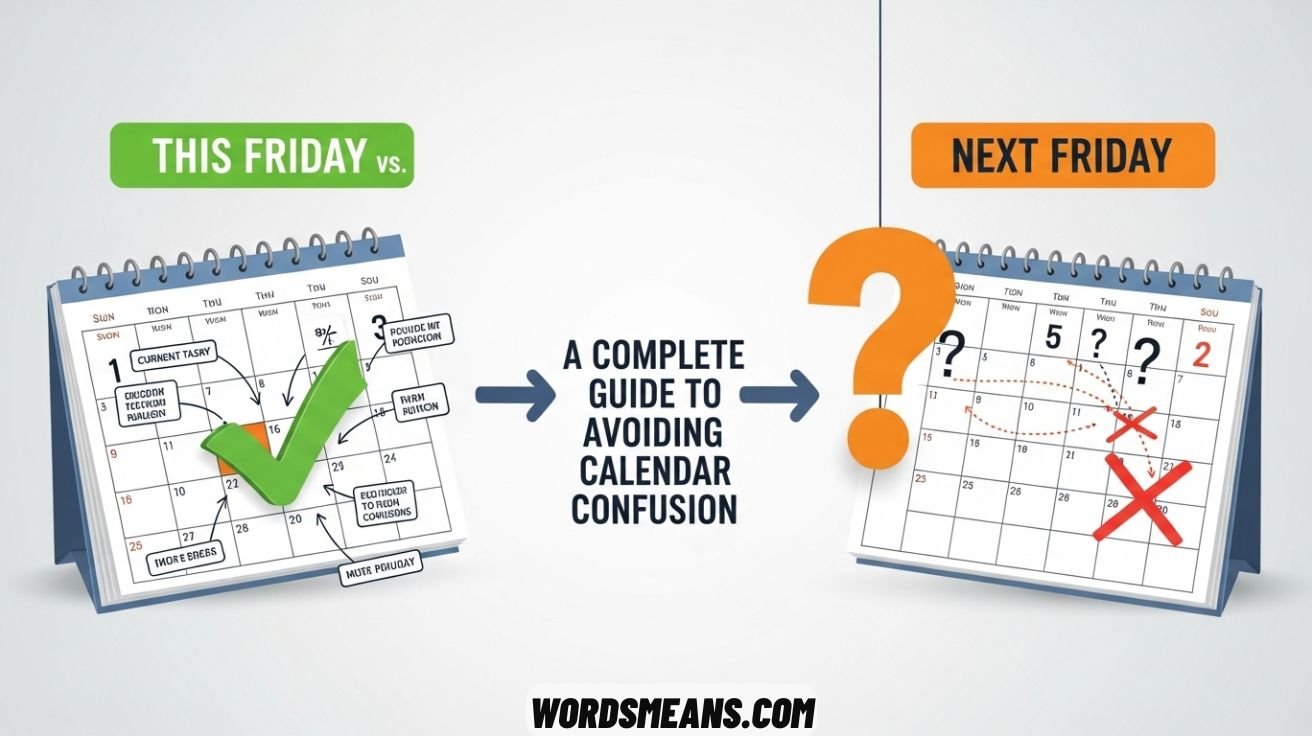
Next Friday vs. This Friday: A Complete Guide to Avoiding Calendar Confusion
Next Friday vs This Friday is about understanding which Friday someone means. This Friday usually means the closest Friday in the current week. Next Friday usually means the Friday of the following week.
Many people get confused with Next Friday vs This Friday. It can cause mistakes with school, work, or plans. Knowing the difference makes life easier and helps you stay organized.
Next Friday vs This Friday changes depending on the day of the week. On Monday, this Friday is soon, and next Friday is later. Using clear dates can prevent confusion and missed plans.
The Basics of Next Friday vs. This Friday
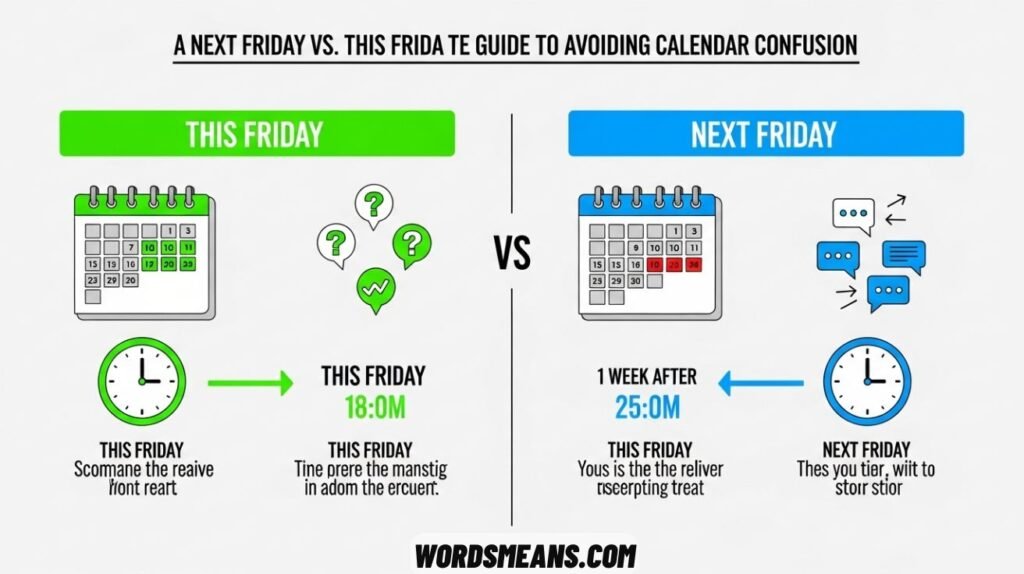
At first glance, the difference between next Friday and this Friday seems simple. However, many Americans get tripped up because these terms can be interpreted differently depending on the day of the week and the context of the conversation. This Friday meaning usually refers to the Friday that comes soonest in your current week, while Next Friday meaning typically refers to the Friday in the following week. Understanding these terms is not just about counting days—it’s about weekday terminology, context, and avoiding scheduling mistakes.
For example, if today is Monday, this Friday is four days away, while next Friday is eleven days away. If today is Saturday, some people may interpret this Friday as the Friday that just passed, and next Friday as the upcoming Friday. Clearly, miscommunication can occur if dates are not clarified.
What Does “This Friday” Mean?
This Friday meaning is generally straightforward, but it can become tricky depending on the current day. In most cases, this Friday refers to the closest Friday that is coming up in the current week. For instance, if it is Monday, Wednesday, or Thursday, saying “this Friday” usually points to the Friday of the same week.
Consider some examples. On Monday, your boss might say, “We need the report by this Friday.” This indicates the end of the current workweek. On Wednesday, if a friend invites you to dinner this Friday, they usually mean the Friday in just two days. But when it’s Saturday or Sunday, this Friday might refer to the Friday that just passed, which is why it’s essential to use specific dates to avoid calendar confusion. Understanding Friday time reference is key in both professional and social contexts.
What About “Next Friday”?
The phrase Next Friday meaning is often the source of the most misunderstandings. In most U.S. contexts, next Friday refers to the Friday after this Friday—the Friday of the following week. If today is Monday, next Friday would be eleven days away. On Wednesday, it’s nine days away. Some people, however, use next Friday interchangeably with this Friday, creating regional differences and personal interpretations.
A good way to think of it is in terms of upcoming Friday vs following Friday. The upcoming Friday is this Friday, and the following Friday is next Friday. Clarifying dates verbally or via calendar invites can prevent scheduling mistakes and confusion in professional settings.
The Week’s Structure and How It Affects These Phrases
The meaning of this Friday and next Friday depends heavily on where you are in the week. The U.S. workweek and casual conversation often create a “sliding scale” for these phrases. The table below helps illustrate how many days away each Friday is based on the current day:
| Current Day | Days to This Friday | Days to Next Friday |
| Monday | 4 | 11 |
| Tuesday | 3 | 10 |
| Wednesday | 2 | 9 |
| Thursday | 1 | 8 |
| Friday | 0 | 7 |
| Saturday | -1 | 6 |
| Sunday | -2 | 5 |
This table highlights how English time expressions like this Friday and next Friday are relative, not fixed. Misreading them can lead to missed event planning Friday opportunities or misaligned planning deadlines.
Common Misconceptions and How to Avoid Them
Many people fall into traps when using these phrases. Misunderstanding Next Friday meaning and This Friday meaning can lead to serious calendar confusion and scheduling mistakes. Some of the most common misconceptions include assuming that next Friday is always seven days away, or that everyone interprets this Friday the same way.
The “Seven Days Away” Trap
One frequent mistake is assuming that next Friday is exactly seven days away. Depending on the current day, next Friday can be anywhere from 7 to 13 days away. Misinterpreting this can cause missed planning deadlines and event planning Friday errors. Always check a calendar or ask for clarification if you are unsure.
The Weekend Confusion
Weekends complicate things further. On Saturday or Sunday, this Friday may refer to the previous Friday, while next Friday usually refers to the upcoming Friday. For example, if someone says, “Let’s meet this Friday” on Sunday, they could be referring to the day that already passed. To avoid avoid date misunderstandings, always clarify with the actual date.
The “It Depends on Who You Ask” Problem
The interpretation of these phrases is not universal. In the Southern U.S., some people use next Friday to mean the very next Friday coming up, not the Friday after. Meanwhile, in other regions, next Friday strictly means the Friday following the current week. These differences highlight why understanding weekday terminology and time phrases in English is crucial.
Is next Friday and this Friday the same thing?
No, next Friday and this Friday are usually not the same. This Friday refers to the nearest Friday in the current week, while next Friday is typically the Friday of the following week. Confusing the two can lead to missed deadlines or scheduling mistakes, particularly in professional environments. Using phrases like by next Friday without specifying the date can create calendar confusion, so always clarify.
See Also : Negative Ghost Rider – Its Meaning, Origin and Usage
Defining “Next Friday” – More Than Just Seven Days Away
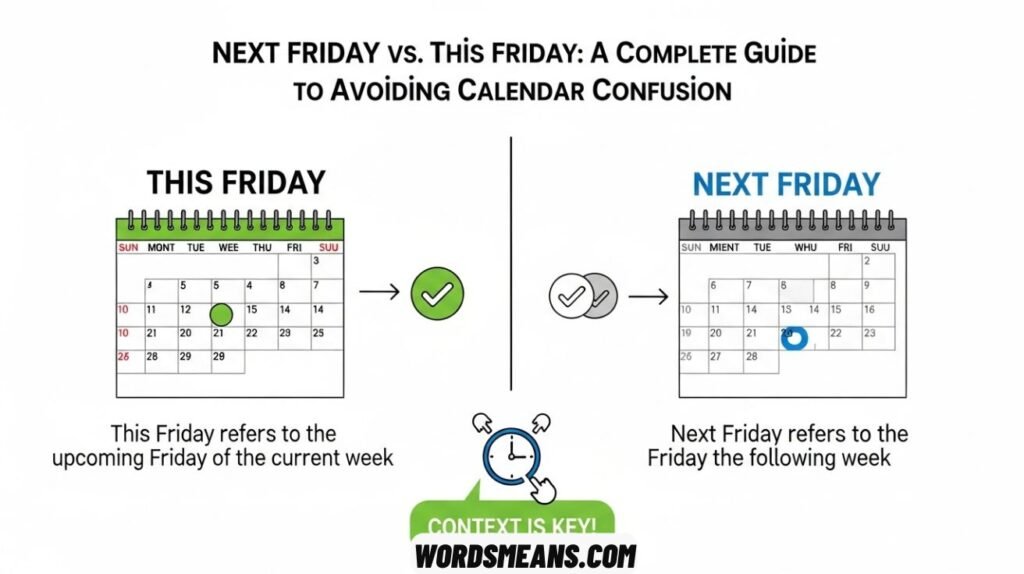
Next Friday meaning is not simply about counting seven days ahead. Depending on the current day, next Friday could be between 7 and 13 days away. Recognizing this is critical for proper event planning Friday and avoiding planning deadlines conflicts.
The Sliding Scale of “Next Friday”
Understanding the sliding scale helps. For instance, if it’s Monday, next Friday is 11 days away; if it’s Thursday, next Friday is only eight days away. This demonstrates how English time expressions are fluid and context-dependent. Misreading the scale is a common source of scheduling mistakes.
The Friday Exception
Interestingly, when it’s already Friday, next Friday usually resets to mean exactly seven days away. This reset is why some people assume next Friday always equals seven days from today, but it only applies on Fridays. Always consider the day when interpreting these Friday time references.
The Importance of Context
Context matters. In business, next Friday usually refers to the Friday of the following week, while in casual conversation, it may mean the very next Friday. Understanding time phrases in English in context helps prevent calendar confusion and ensures everyone is on the same page.
“This Friday” Explained – Navigating the Current Week
Navigating this Friday is simpler but still requires attention. From Monday to Thursday, this Friday refers to the upcoming Friday. On Friday itself, it means today. On Saturday and Sunday, it may refer to the Friday that just passed. Using specific dates in conversation is the safest way to avoid avoid date misunderstandings.
The Sliding Scale of “This Friday”
Like next Friday, this Friday follows a sliding scale. The meaning shifts depending on the day of the week. For example, on Wednesday, this Friday is in two days; on Sunday, it may refer to the previous Friday. Awareness of this helps avoid scheduling mistakes.
Real-Life Examples of “This Friday”
In work settings, if your manager says, “Submit the report this Friday,” you know it’s the closest Friday. In social plans, a friend texting on Wednesday about dinner this Friday usually means the day after tomorrow. On weekends, someone reflecting on a movie this Friday is talking about the Friday that already passed. These examples demonstrate the importance of clarifying dates.
The Weekend Transition
Weekends are the trickiest. Suddenly, this Friday can shift from a future event to a past one. Misunderstanding this transition is a common source of calendar confusion, especially for event planning Friday across weekends.
Real-Life Scenarios: Examples of “Next Friday”
Work Scenarios
Project deadlines often use next Friday. For example, “The first draft is due next Friday” usually gives over a week to complete, depending on the current day. Board meetings may also be scheduled next Friday, requiring careful planning deadlines awareness.
Social Plans
A friend announcing a party on next Friday on Wednesday signals it is not this week’s Friday but the Friday of the following week. Concert ticket sales or special events often use next Friday in similar ways, highlighting the need for clarifying dates.
Personal Life
Doctor appointments, travel plans, or personal errands scheduled next Friday require careful attention to avoid scheduling mistakes. Misinterpreting the date can lead to missed appointments or social miscommunications.
The Importance of Clarification
The key to avoiding calendar confusion is always clarifying dates. Use explicit dates whenever possible, such as “Friday, June 15th” instead of this Friday. Providing context, asking questions, and using digital tools like calendar invites can prevent avoid date misunderstandings and ensure smooth event planning Friday. Consistency in usage also helps friends, family, and colleagues understand your meaning of next Friday vs this Friday.
Understanding the Confusion Between Next Friday and This Friday
Many people struggle with Next Friday vs. This Friday, often misunderstanding what day is actually meant. The confusion arises because these phrases are relative, depending on the current day of the week and regional differences in the U.S. Without clarity, it’s easy to make scheduling mistakes or misinterpret Friday time references.
The key is knowing that This Friday meaning usually points to the closest upcoming Friday in the current week, while Next Friday meaning generally refers to the Friday of the following week. By being aware of weekday terminology and English time expressions, you can avoid calendar confusion in professional and personal plans.
How This Friday Changes Meaning During the Week
This Friday meaning shifts depending on which day you are currently in. From Monday to Thursday, it usually indicates the Friday in the same week. On Friday itself, it refers to today, and during weekends, it may indicate the Friday that has just passed. Understanding this helps prevent avoid date misunderstandings.
For example, if a manager says, “Submit the report this Friday” on Monday, you have four days to complete it. On Saturday, this Friday might refer to the previous day, which could confuse someone who is not tracking planning deadlines carefully. Context is key to accurate Friday time references.
See Also : Holding Up 4 Fingers – Its Meaning, Origin and Usage
Next Friday Isn’t Always Just Seven Days Away
Many assume that Next Friday meaning is always exactly seven days from today. However, depending on the current day, it can range from 7 to 13 days away. Misinterpreting this can lead to scheduling mistakes, missed deadlines, or social blunders, creating calendar confusion.
For example, if today is Tuesday, next Friday will be ten days away. Using explicit dates alongside phrases like by next Friday meaning is essential for clear communication. Employing time phrases in English with context ensures that your colleagues, friends, and family understand your intended upcoming Friday vs following Friday correctly.
The Weekend Makes Friday References Tricky
Weekends complicate Next Friday vs. This Friday because this Friday may refer to the Friday that just passed, and next Friday typically means the upcoming Friday. Without clarification, this can lead to avoid date misunderstandings and scheduling mistakes, especially for weekend events.
For example, someone planning a movie outing on Sunday might say, “Let’s meet this Friday,” meaning the past Friday, confusing those who assume it’s the next Friday. Clear communication using exact dates or digital calendar invites helps prevent calendar confusion and ensures Friday time references are correctly understood.
Work Scenarios Highlight the Importance of Clarity
In professional settings, misunderstanding Next Friday vs. This Friday can disrupt planning deadlines. A project leader might say, “Submit the first draft by next Friday,” meaning the Friday of the following week, giving employees more time than if it were this Friday. Misreading these terms may result in errors or missed deadlines.
Providing clarifying dates alongside phrases like by next Friday meaning eliminates ambiguity. Businesses increasingly rely on time phrases in English with context, particularly in cross-regional communication, to prevent calendar confusion and maintain smooth workflow. Understanding these subtleties is key to professional reliability.
Social Plans Can Easily Be Misunderstood
In personal life, misinterpreting Next Friday meaning can create awkward situations. A friend may invite you to dinner on next Friday, but you might confuse it with this Friday, causing missed plans. Understanding English time expressions and the difference between upcoming Friday vs following Friday helps prevent social mix-ups.
When planning events, using explicit dates ensures clarity. Saying “Dinner on Friday, June 15th” removes ambiguity. Incorporating Friday time reference awareness and weekday terminology into casual planning avoids scheduling mistakes and improves communication with friends and family.
Travel and Personal Commitments Require Accuracy
For appointments or travel, misreading Next Friday vs. This Friday can cause missed flights or meetings. Saying “Book a trip next Friday” without specifying the date could confuse participants about Friday significance, resulting in errors. Clear communication is critical to avoid calendar confusion.
Using exact dates, clarifying dates, and context ensures everyone is aligned. Knowing This Friday meaning versus Next Friday meaning helps with planning deadlines, event planning Friday, and personal commitments. Attention to time phrases in English reduces the risk of mistakes and keeps schedules on track.
Tips for Avoiding Misunderstandings With Friday References
To prevent scheduling mistakes, always use exact dates along with phrases like this Friday or next Friday. Digital calendar invites, context notes, and confirming the intended day helps avoid calendar confusion in both work and social life. Awareness of Friday time reference is essential.
Additionally, knowing the difference between next and this, employing English time expressions consistently, and considering regional variations ensures clarity. By following these strategies, you can avoid avoid date misunderstandings and make event planning Friday simple and accurate for everyone involved.
FAQs
What does it mean by next Friday?
It usually means the Friday of the following week, not the closest Friday in the current week.
What happens on next Friday?
It depends on context, but typically it’s the day scheduled for an event, deadline, or plan in the Friday after this week.
What is upcoming Friday?
It refers to the closest Friday that is coming soon, often the same as “this Friday” in the current week.
Is Friday week the same as next Friday?
Yes, in some regions like the U.K., “Friday week” often means the Friday of the following week, similar to next Friday.
Conclusion
Understanding Next Friday vs This Friday helps you plan your week better. This Friday usually means the closest Friday in the current week, while Next Friday means the Friday after that. Knowing the difference avoids mistakes with school, homework, or events. Clear planning saves time and helps you stay organized in daily life.
Always check the day and the date when talking about Next Friday vs This Friday. Use calendars or write the exact date to be sure. Being clear prevents confusion with friends, teachers, or family. Using these phrases correctly makes schedules simple, and you can meet deadlines and enjoy your plans without worry.